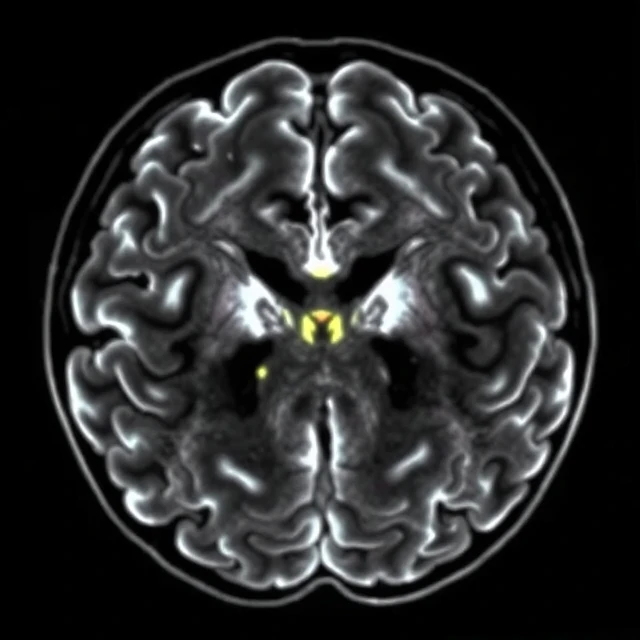
A progressive movement disorder that begins in mid-adulthood often traces to a single gene. Huntington’s disease is caused by an expanded CAG trinucleotide repeat in the HTT gene on chromosome 4. The elongated polyglutamine tract in the huntingtin protein is toxic to neurons, particularly in the striatum.
Inheritance is autosomal dominant. Each child of an affected parent has a 50 percent risk of inheriting the expanded allele. Onset is typically between ages 30 and 50, with progressive chorea, cognitive decline, and psychiatric symptoms. Larger expansions tend to cause earlier onset.
No cure yet exists, though symptomatic treatments and clinical trials of gene-silencing therapies offer hope. Predictive testing is available but carries profound psychological implications. Genetic counseling is essential before testing. The disease illustrates the dramatic consequences of a dynamic mutation that changes across generations.
- Autosomal dominant neurodegenerative disorder
- Caused by CAG repeat expansion in HTT
- Produces progressive motor and cognitive decline
- Onset usually in mid-adulthood
Comments
No comments yet. Be the first to share a thought.
Leave a comment