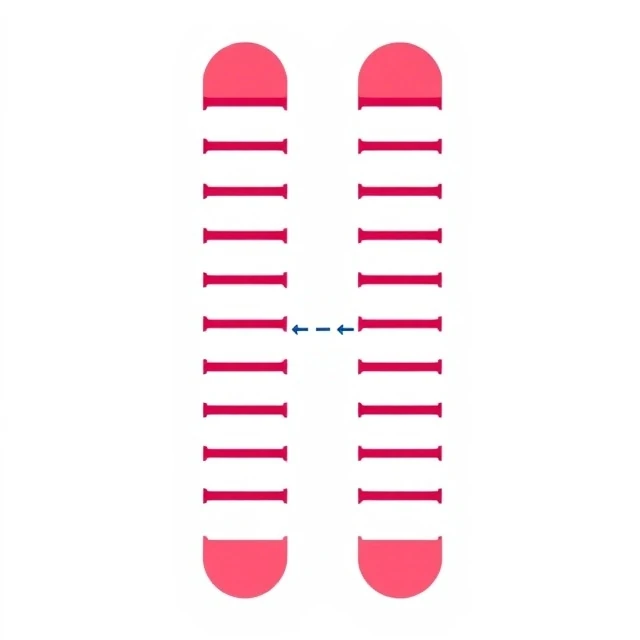
Genes rarely exist in only one form. An allele is one of the alternative versions of a gene that can occupy the same locus on a chromosome. Different alleles arise through mutation and may produce distinct versions of a trait or leave the trait unchanged.
Humans inherit two alleles for most genes, one from each parent. When the alleles match, the individual is homozygous at that locus. When they differ, the individual is heterozygous. The relationship between alleles—dominant, recessive, or incomplete—determines how the trait appears.
Population geneticists track allele frequencies to study evolution and disease risk. A single nucleotide difference can create a new allele with major medical consequences, as seen in many inherited disorders. Laboratory techniques such as PCR and sequencing identify specific alleles in research and clinical settings.
- Alternative version of a gene
- Occupies the same chromosomal locus
- Inherited in pairs in diploid organisms
- Can be dominant, recessive, or codominant
Comments
No comments yet. Be the first to share a thought.
Leave a comment