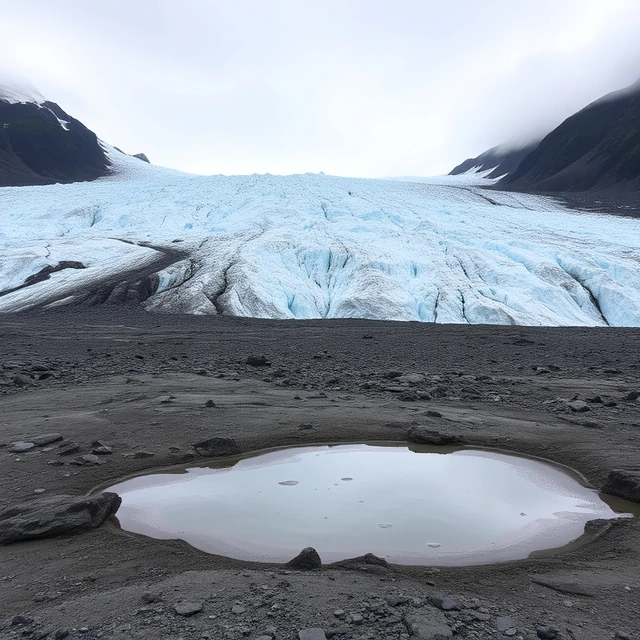
A glacier is a large body of ice that moves slowly over land. It forms where snow accumulates faster than it melts. Over years, the snow compresses into dense ice. When the ice gets thick enough, gravity pulls it downhill. A glacier may move a few centimeters a day or several meters. It looks static. It is not.
Glaciers shape landscapes. They carve valleys, grind rock into powder, and deposit debris. Many mountain valleys owe their U-shape to glaciers that have long since melted. Glaciers store water. In the Andes, Himalayas, and Alps, they feed rivers that supply drinking water and irrigation to billions of people.
Most glaciers are shrinking. Global warming has accelerated ice loss. The Greenland and Antarctic ice sheets are losing mass, raising sea levels. Mountain glaciers in the Alps could largely disappear by 2100. The loss threatens water supplies, hydropower, and tourism. Some communities depend on glacial meltwater for their survival.
Key features
- Accumulation and ablation zones
- Crevasses
- Moraines
- Meltwater streams
- Ice sheets vs. alpine glaciers
Comments (2)
Leave a comment