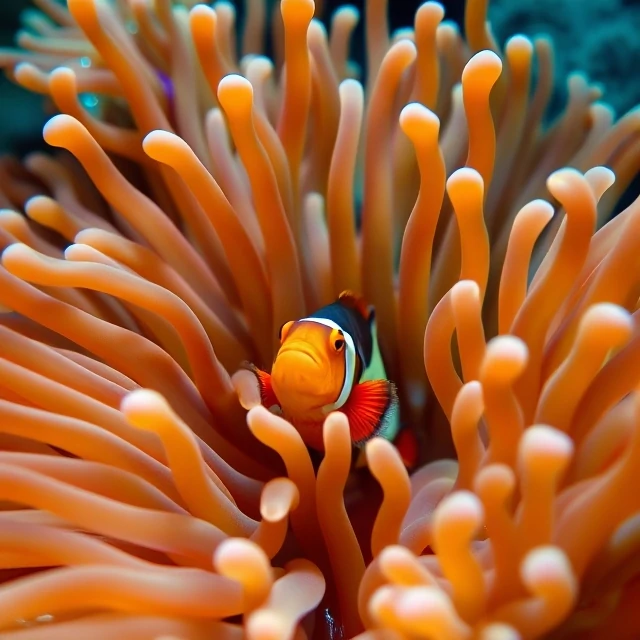
Clownfish live among sea anemones. The anemone's stinging tentacles protect the fish. The fish chases off predators and drops nutrients. Neither species could do as well alone. That relationship is symbiosis: a close, long-term interaction between two different species.
Biologists split symbiosis into three main types. Mutualism benefits both partners. Commensalism benefits one without harming the other. Parasitism benefits one at the expense of the other. The lines blur in practice. A relationship that looks parasitic might turn mutualistic under different conditions.
Examples of symbiosis
- Mycorrhizal fungi and plant roots exchange nutrients for sugars
- Gut bacteria break down food for their animal hosts
- Cleaner fish pick parasites off larger fish
- Lichen is a partnership between a fungus and an alga
Symbiosis shaped evolution in profound ways. Mitochondria, the energy factories in our cells, were once free-living bacteria that got absorbed into larger cells. That event, called endosymbiosis, happened over a billion years ago and made complex life possible. Symbiosis is not a curiosity. It is one of the engines of biological innovation.
Comments
No comments yet. Be the first to share a thought.
Leave a comment