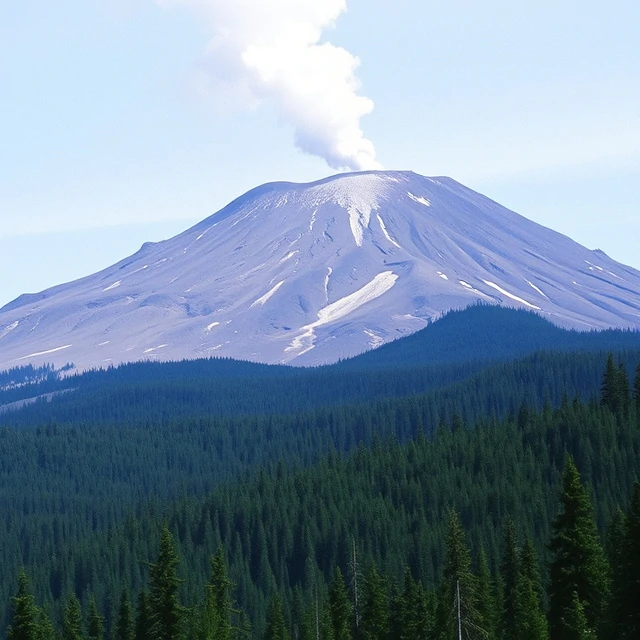
Bare rock. Lichen. Moss. Grass. Shrubs. Trees. Give an ecosystem enough time and it will change, sometimes dramatically. Succession is the gradual shift in species composition over time, and it is one of ecology's oldest ideas.
Frederic Clements proposed in the early 1900s that succession ends in a stable climax community determined by climate. Henry Gleason argued instead that communities are loose assemblages of species responding individually to local conditions. The debate still simmers. Most ecologists today lean toward Gleason's view, with disturbance, chance, and history playing major roles.
Two main types
- Primary succession starts on bare substrate with no soil
- Secondary succession starts on previously colonized ground after a disturbance
Mount St. Helens after the 1980 eruption became a natural laboratory for studying primary succession. Ecologists have tracked the return of plants, insects, and mammals for decades. The recovery is not a straight line. It loops, stalls, and sometimes reverses. Succession is less a march toward a final destination and more a long conversation between organisms and their environment.
Comments
No comments yet. Be the first to share a thought.
Leave a comment