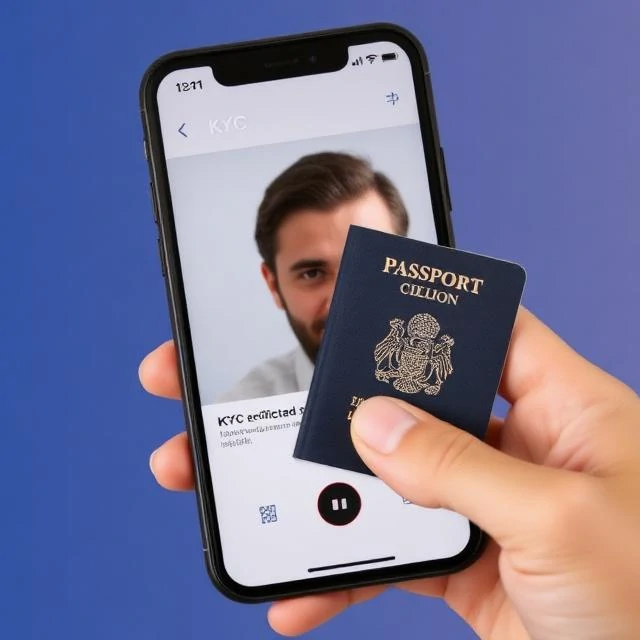
Know Your Customer rules require crypto exchanges to verify who their users are. You upload a government ID, take a selfie, sometimes prove your address with a utility bill. The exchange checks the data against sanctions lists and runs a background screen. Until you pass, you cannot deposit or trade. The process takes minutes on a good platform and days on a bad one.
KYC exists because regulators treat crypto exchanges as financial institutions. Anti-money laundering laws apply. The FATF sets the international standard, and each country implements it. The United States enforces through FinCEN and state regulators. The EU has its own framework. The goal is to prevent crypto from being used for laundering, terrorism financing, and sanctions evasion. The cost is privacy. Exchanges now hold personal data on millions of users, which makes them targets for hackers. Several exchanges have suffered data breaches that exposed customer IDs and addresses.
What KYC usually requires
- Government-issued photo ID — passport, driver's license, or national ID
- Selfie or liveness check — proves you match the document
- Proof of address — utility bill, bank statement, or tax document
- Source of funds — for large deposits or high-volume accounts
Decentralized exchanges do not require KYC. That is their main draw for privacy-focused users. It is also why regulators keep pressuring them.
Comments
No comments yet. Be the first to share a thought.
Leave a comment