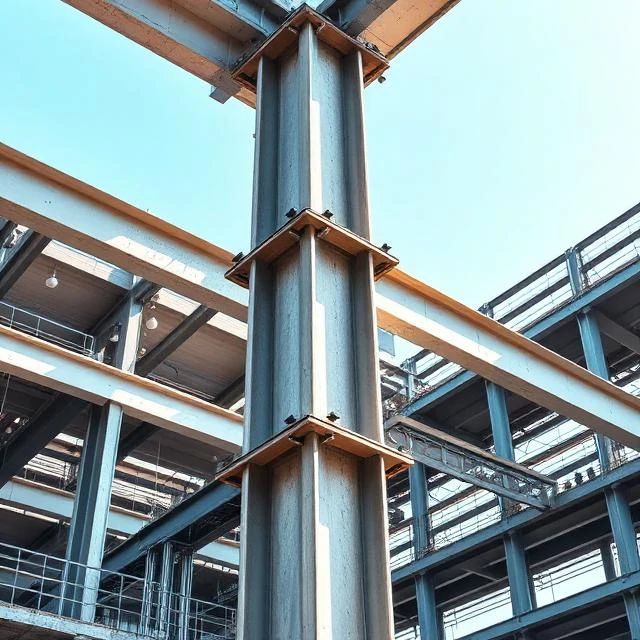
A column is a vertical structural member that transfers loads downward. It carries the weight of beams, slabs, and roofs to the foundation. It works primarily in compression. A short, fat column crushes. A tall, slender column buckles. The relationship between length, shape, and material determines how much load it can carry. Columns are one of the oldest structural elements in architecture. The Greeks carved them from stone. The Romans refined their proportions. Modern engineers build them from steel and reinforced concrete.
Columns come in many types. A steel column is often an I-shape or a hollow tube. A concrete column is reinforced with rebar and may be cast in place or precast. A timber column is used in light-frame construction. A composite column combines steel and concrete. The column may be exposed or concealed inside a wall. In some buildings, columns are celebrated. In others, they are hidden.
Connections matter. A column must transfer its load to the foundation and receive loads from beams and slabs above. A poorly detailed connection can fail, especially under seismic or wind loading. In earthquake zones, columns must be designed to bend without breaking, and the connections must be stronger than the members. The column is a simple concept. The engineering is not.
Comments
No comments yet. Be the first to share a thought.
Leave a comment