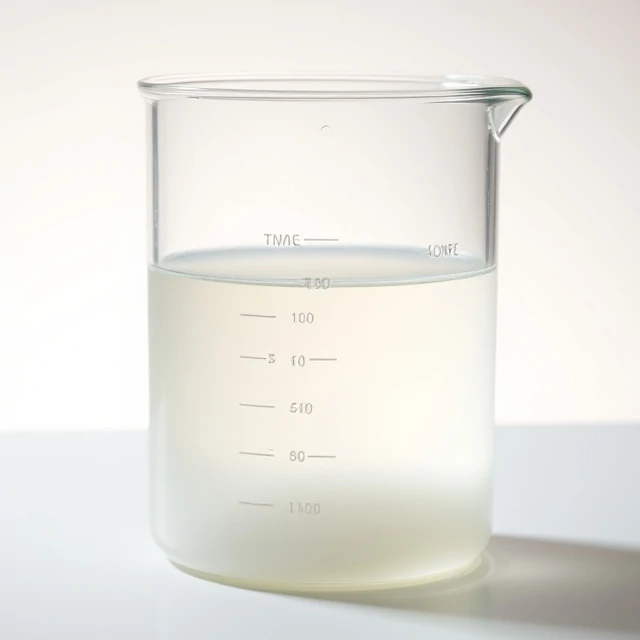
You can dissolve a spoonful of sugar in water. Keep adding sugar, and eventually no more will dissolve. The solution is saturated. Solubility is the maximum amount of solute that can dissolve in a given amount of solvent at a given temperature. It is usually expressed in grams of solute per 100 milliliters of solvent. Solubility depends on the nature of the solute and solvent, the temperature, and the pressure.
The rule of thumb is like dissolves like. Polar solvents dissolve polar and ionic solutes. Nonpolar solvents dissolve nonpolar solutes. Water dissolves salt and sugar but not oil. Hexane dissolves oil but not salt. Temperature affects solubility. For most solids, solubility increases with temperature. For gases, solubility decreases with temperature. That is why warm soda goes flat faster than cold soda. Pressure affects gas solubility. Henry's law states that the solubility of a gas is proportional to its partial pressure. That is why carbonated drinks are bottled under pressure.
Solubility is important in chemistry, biology, and industry. It determines how drugs are absorbed in the body. It affects how pollutants move through soil and water. It controls the formation of minerals and the behavior of nutrients in soil. It is used in crystallization, extraction, and chromatography.
The solubility product constant, Ksp, describes the equilibrium between a sparingly soluble salt and its ions in solution. It is used to predict whether a precipitate will form. If the ion product exceeds Ksp, a precipitate forms. If it is less, the solution is unsaturated.
Comments
No comments yet. Be the first to share a thought.
Leave a comment