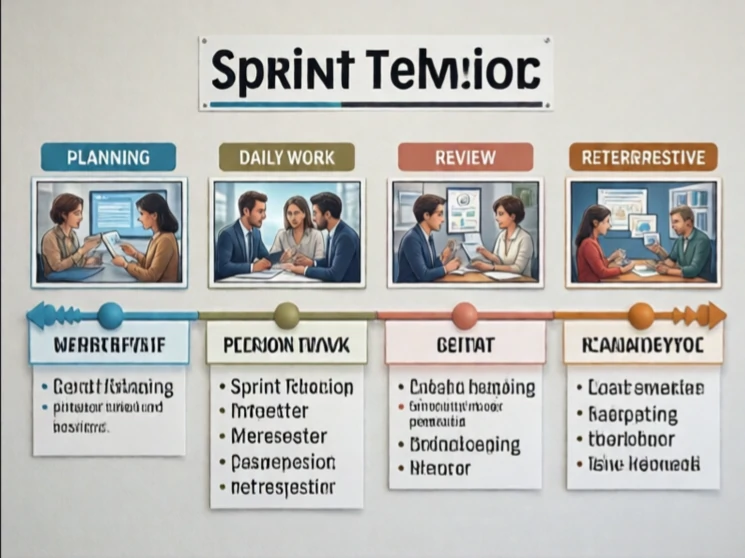
Complex product development can be managed with a lightweight framework of roles, events, and artifacts. Scrum is that framework. It organizes work into short, time-boxed iterations called sprints, usually two to four weeks long. A cross-functional team delivers a potentially releasable increment of product at the end of each sprint.
Three roles are defined: the product owner, who prioritizes the work; the scrum master, who facilitates the process and removes impediments; and the development team, which builds the product. Events include sprint planning, daily scrum, sprint review, and sprint retrospective. Artifacts include the product backlog, sprint backlog, and increment.
Scrum emphasizes transparency, inspection, and adaptation. It does not prescribe technical practices; teams add those as needed. When followed with discipline it provides a regular cadence of delivery and feedback. When followed only in name it can become empty ritual. The framework remains one of the most widely adopted approaches to agile product development.
Comments
No comments yet. Be the first to share a thought.
Leave a comment