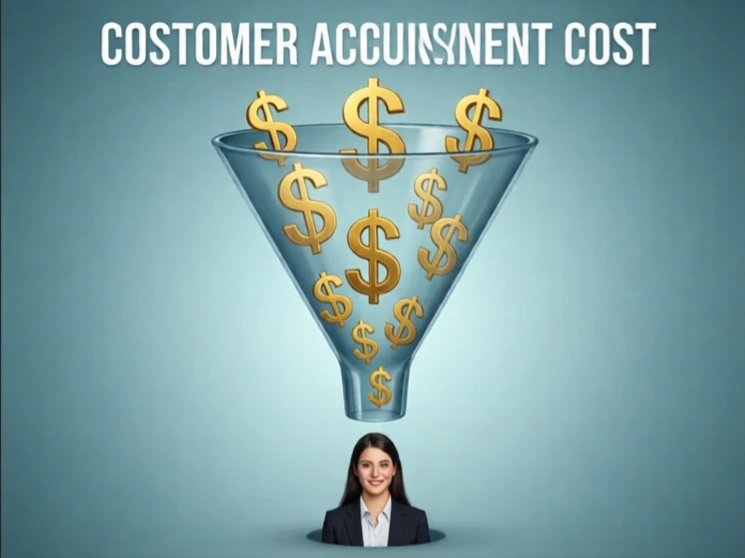
Customer acquisition cost is the cost associated with convincing a customer to buy a product or service. It includes marketing spend, sales salaries, advertising, promotions, and any other expense tied to bringing in new customers. The formula is simple: total acquisition costs divided by the number of new customers acquired in a given period.
CAC matters because it tells you how much you are paying for growth. If it costs $100 to acquire a customer who spends $50, the business is losing money on every sale. If the customer spends $500 over time, the math works. That is why CAC is almost always paired with customer lifetime value.
Factors that affect CAC:
- Industry competitiveness.
- Marketing channel efficiency.
- Brand awareness and reputation.
- Sales cycle length.
- Target audience definition.
A healthy business has a CLV at least three times higher than CAC. Below that, growth becomes expensive and fragile. CAC tends to rise as a company scales, because the easiest customers are acquired first. Keeping it down requires constant testing, channel diversification, and a product people actually want to talk about.
Comments
No comments yet. Be the first to share a thought.
Leave a comment