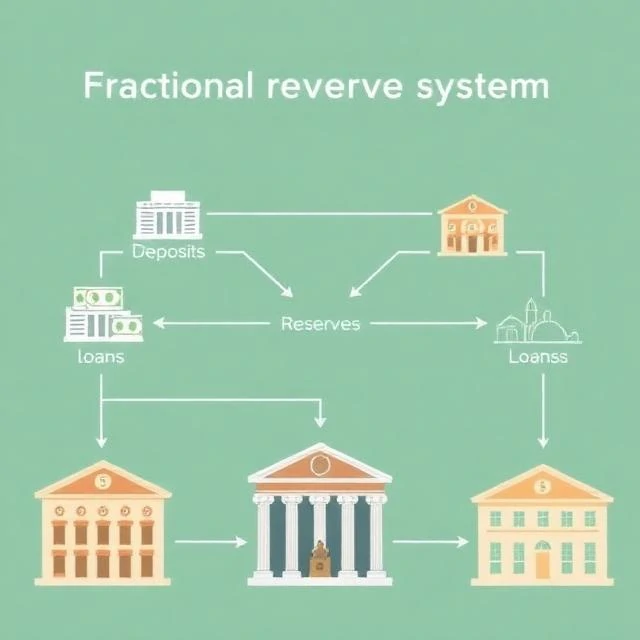
Fractional reserve banking is a system where banks hold only a fraction of deposits as reserves and lend out the rest. If a bank has $1 million in deposits and a 10 percent reserve requirement, it keeps $100,000 and lends $900,000. The borrowers spend the money, and it ends up in other banks, which lend out a portion again. The process multiplies the money supply.
The system is how most modern banking works. It is not without risk. If depositors demand more than the bank's reserves, the bank fails. That is what happened during bank runs before deposit insurance. The reserve requirement reduces the risk, but it does not eliminate it. Banks also hold capital to absorb losses, and central banks lend to banks in emergencies.
The reserve requirement in the United States was 10 percent for large banks for decades. In 2020, the Federal Reserve reduced it to zero, arguing that reserves were no longer the binding constraint on lending. Capital requirements and liquidity rules now do the work that reserve requirements used to do. Other countries still use reserve requirements, and some use them as a monetary policy tool.
Fractional reserve banking is controversial. Critics argue that it creates money out of thin air and fuels booms and busts. Supporters argue that it channels savings into investment and supports economic growth. The debate is old, going back to the 19th century. The system is not perfect, but no one has designed a better one that works at scale.
Comments
No comments yet. Be the first to share a thought.
Leave a comment