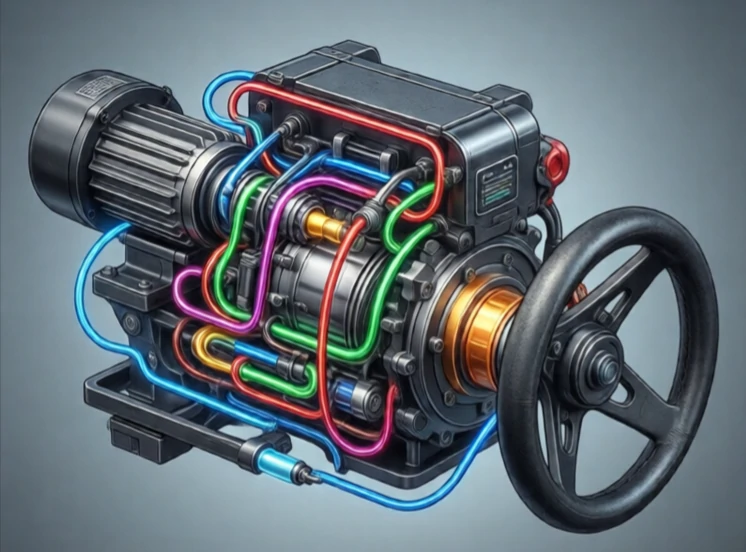
Before power steering, parking a full-size car required real effort. The steering wheel was connected directly to the wheels through a gearbox, and the driver fought every pound of front-end weight. Power steering changed that by adding hydraulic or electric assistance.
Chrysler introduced hydraulic power steering on the 1951 Imperial. A belt-driven pump pressurized fluid, and a control valve directed that pressure to a piston that helped move the steering gear. The system worked well for decades. It also leaked, whined, and robbed a little engine power.
Hydraulic versus electric
- Hydraulic: belt-driven pump, fluid lines, consistent feel.
- Electric: motor on the steering column or rack, no fluid.
- Electric systems save fuel because they only draw power when steering.
- Electric systems allow tunable steering weight and self-parking features.
Electric power steering has largely replaced hydraulic units in new cars. It enables lane keeping assist and automated parking because the car can steer itself. Some enthusiasts complain that electric systems feel numb compared to a well-tuned hydraulic rack. That trade-off buys efficiency and driver-assist capability, and most buyers accept it.
Comments (2)
Leave a comment