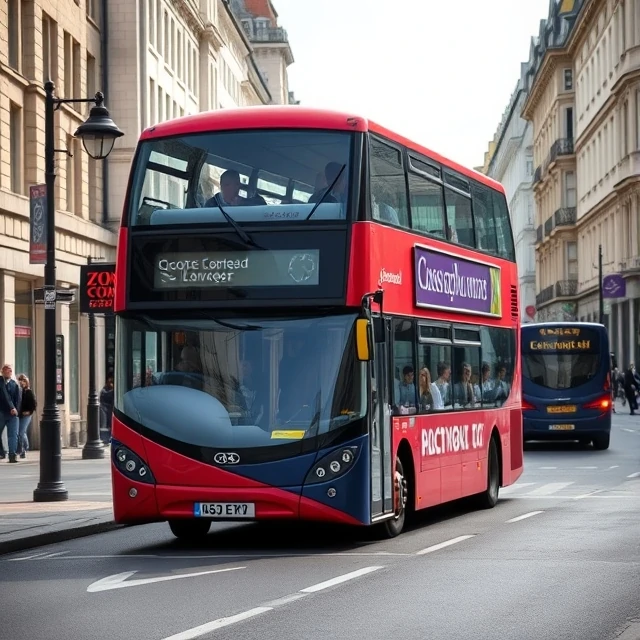
A bus carries many passengers on a fixed route. It is the workhorse of public transit. A standard transit bus is 40 feet long and holds 40 to 70 people, depending on seating and standing room. Articulated buses bend in the middle and stretch to 60 feet. Double-deckers stack two floors and are common in London, Hong Kong, and Singapore.
Buses come in several types. City buses stop frequently and have low floors for easy boarding. Intercity coaches have reclining seats, luggage bays, and restrooms. School buses are painted yellow for visibility and built with compartmentalized seating for safety. Electric buses are increasingly common, with quieter operation and zero tailpipe emissions. Some cities run trolleybuses that draw power from overhead wires.
The bus has a social function. It is the most affordable form of motorized transport, used by people who cannot afford cars and by those who choose not to drive. A good bus system reduces congestion, cuts emissions, and connects neighborhoods. A bad one is slow, unreliable, and unpleasant.
Bus rapid transit tries to combine the speed of rail with the flexibility of buses. Dedicated lanes, level boarding, and prepaid fares make buses run more like trains. Cities from Bogotá to Guangzhou have built successful BRT systems.
Comments (2)
Leave a comment