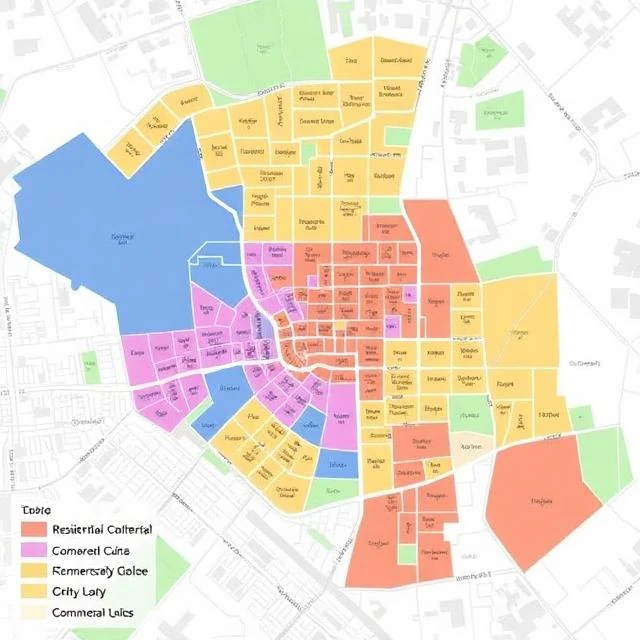
Zoning is a set of municipal regulations that govern how land can be used and how much can be built on it. It divides a city into districts — residential, commercial, industrial, mixed-use — and sets rules for each. Those rules cover building height, density, setbacks, parking, and permitted uses.
Zoning shapes cities profoundly. It determines where people live, where they work, and how far they have to travel between the two. It determines whether a neighborhood has a corner store or only houses. It determines whether a building can be tall or must be low. It is one of the most powerful tools a city has.
Zoning has a complicated history. It has been used to protect neighborhoods from incompatible uses, but also to exclude people and enforce segregation. Many cities are now reforming zoning to allow more housing, more mixed-use development, and more walkable neighborhoods. The debate is often heated because zoning affects property values and quality of life.
For architects and developers, zoning is the first constraint to understand. A site's zoning determines what can be built before a single line is drawn. Ignore it, and the project will fail at the permit stage.
Comments (2)
Leave a comment