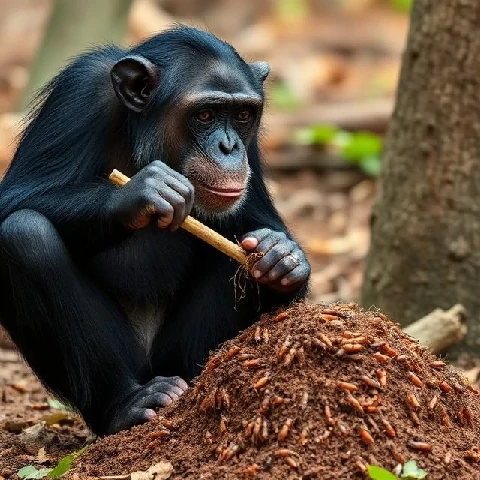
Tool use is the employment of objects to accomplish tasks. Humans are not the only species that do it. Chimpanzees fish for termites with twigs. Crows fashion hooks from wire. Sea otters crack open shellfish with stones. Octopuses carry coconut shells as portable shelters. Tool use appears in birds, mammals, insects, and cephalopods. It is not a single behavior but a category that includes many different strategies.
What sets human tool use apart is its complexity and cumulative nature. Humans make tools to make other tools. A stone knife shapes a wooden spear. A spear hunts an animal. A bone needle sews clothing. This ratchet effect, where each generation builds on the last, has produced everything from hand axes to smartphones. Tool use also shapes the body. The human hand, with its opposable thumb and fine motor control, evolved in part through toolmaking.
Examples across species
- Chimpanzees using leaves as sponges and twigs as probes.
- New Caledonian crows shaping hooks from sticks.
- Sea otters using rocks to break shells.
- Ants using leaves and soil to build bridges.
Tool use is not a sign of intelligence in every case. It is a behavior that emerges when an animal's ecology makes it useful.
Comments
No comments yet. Be the first to share a thought.
Leave a comment