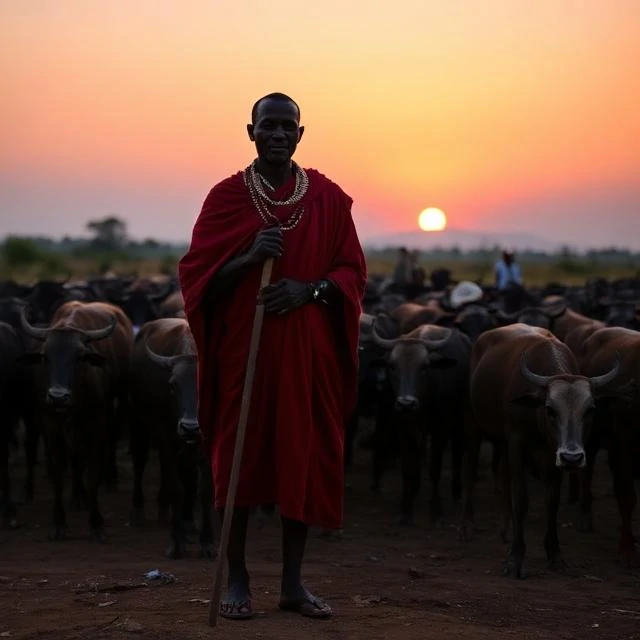
Pastoralism is a subsistence strategy based on herding domesticated animals. Herders raise cattle, sheep, goats, camels, yaks, or reindeer, depending on the environment. They rely on animal products: milk, meat, blood, hides, wool. Some groups are fully nomadic, moving constantly. Others practice transhumance, moving between fixed summer and winter pastures while maintaining a home base. Pastoralism works best on land too dry, steep, or cold for crops.
Herding shapes social life. Animals are wealth. Bridewealth is often paid in cattle, and a family's standing is measured by herd size. Men typically control livestock, while women manage milk processing and household economy. Herders develop detailed knowledge of animal behavior, grazing patterns, and weather. They also maintain tense but necessary relationships with farmers, trading meat and dairy for grain and tools.
Common patterns
- Mobile herds following seasonal pasture.
- Bridewealth paid in livestock.
- Milk and blood as daily staples.
- Trade with farming communities.
Pastoralists are not leftovers from an earlier age. Many operate in modern economies, selling livestock at urban markets and using trucks and phones to manage herds.
Comments
No comments yet. Be the first to share a thought.
Leave a comment