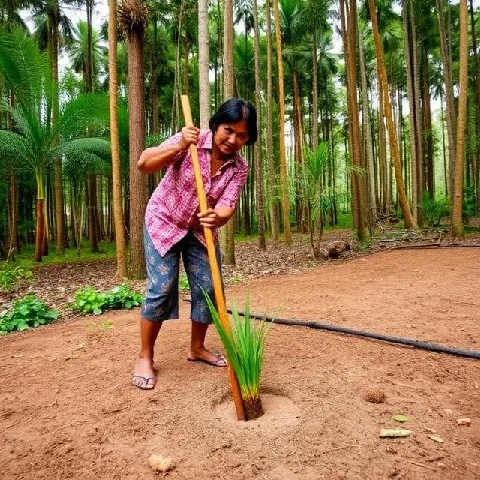
Horticulture is a small-scale farming system that uses simple hand tools. Digging sticks, hoes, and machetes do the work. No plows, no draft animals, no irrigation canals. Gardens are often cleared by slash-and-burn, then planted with a mix of crops: yams, taro, maize, beans, bananas. After a few seasons, soil fertility drops and the plot is abandoned. The farmer moves on and clears new land.
This system supports larger populations than foraging but smaller ones than intensive agriculture. It is common in tropical forests and hilly regions where plows are impractical. Horticulturalists often live in villages and maintain complex kinship networks. Land is usually held by lineages or clans rather than individuals. Surplus is modest, so full-time craft specialists and rulers are rare.
Key features
- Hand tools only; no plow or draft animals.
- Shifting cultivation with fallow periods.
- Mixed crops rather than single fields.
- Village life with kinship-based land tenure.
Horticulture sits between foraging and intensive agriculture. It shows that farming comes in many forms, not just the industrial model.
Comments
No comments yet. Be the first to share a thought.
Leave a comment