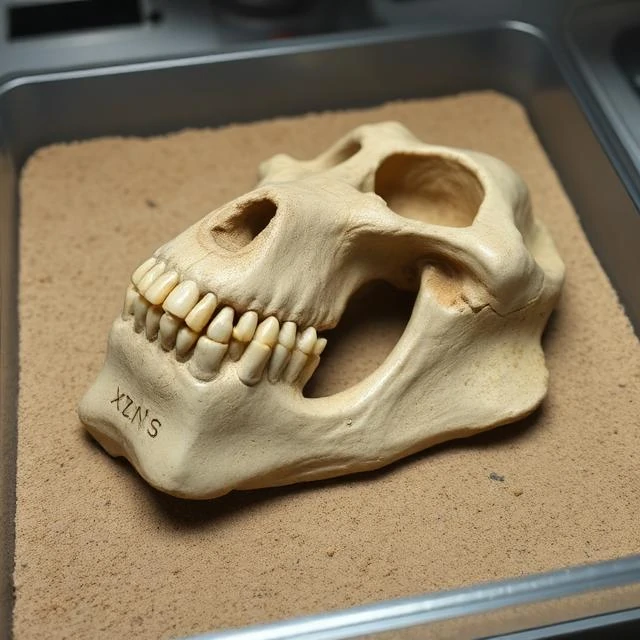
A hominin is a member of the human lineage after the split from the chimpanzee line. That split happened roughly six to eight million years ago in Africa. Everything on our side of the divide is a hominin: modern humans, extinct species like Homo erectus and Neanderthals, and the earlier australopithecines. The term is taxonomic, not evaluative. It defines a branch, not a ladder of progress.
What unites hominins is not one single trait but a package: bipedalism, reduced canine teeth, larger brains relative to body size, and increasingly complex tool use. These traits appeared at different times and rates. Early hominins walked upright but had small brains. Later ones had large brains but retained other archaic features. The fossil record is patchy, and new finds regularly reshape the family tree.
Key genera
- Sahelanthropus and Orrorin: earliest possible hominins.
- Australopithecus: upright walkers with ape-sized brains.
- Homo: toolmakers with expanding brains.
- Homo sapiens: modern humans, appearing around 300,000 years ago.
Every new hominin fossil is a data point in an argument about who we are and where we came from.
Comments (2)
Leave a comment