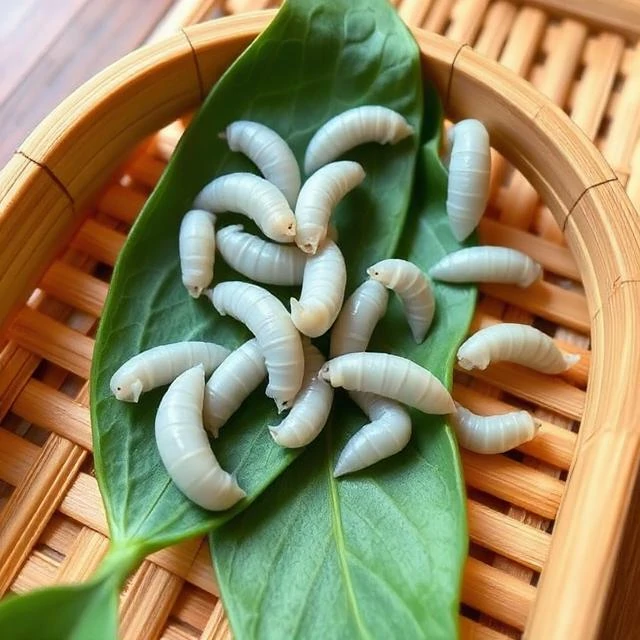
Sericulture is the rearing of silkworms to produce raw silk. The practice began in China around 2,700 BCE, according to tradition, and was a closely guarded secret for thousands of years. Silk became one of the most valuable trade goods in the ancient world, and the Silk Road takes its name from it.
The process starts with the mulberry silkworm, Bombyx mori, which feeds only on mulberry leaves. Farmers raise the caterpillars indoors, feeding them chopped leaves several times a day. After about a month, the worms spin a cocoon of a single silk thread, up to a kilometre long. Cocoons are harvested, and the pupae are killed with heat before they can emerge and break the thread. The filaments are reeled together into yarn.
Where it happens
- China and India produce most of the world's raw silk
- Uzbekistan, Thailand, and Brazil are significant producers
- Small-scale sericulture supports rural livelihoods
- Wild silks like tussah come from other moth species
Sericulture is labour-intensive and sensitive to temperature and disease. It also requires a steady supply of mulberry leaves, so silkworm rearing and mulberry cultivation usually go together.
Comments
No comments yet. Be the first to share a thought.
Leave a comment