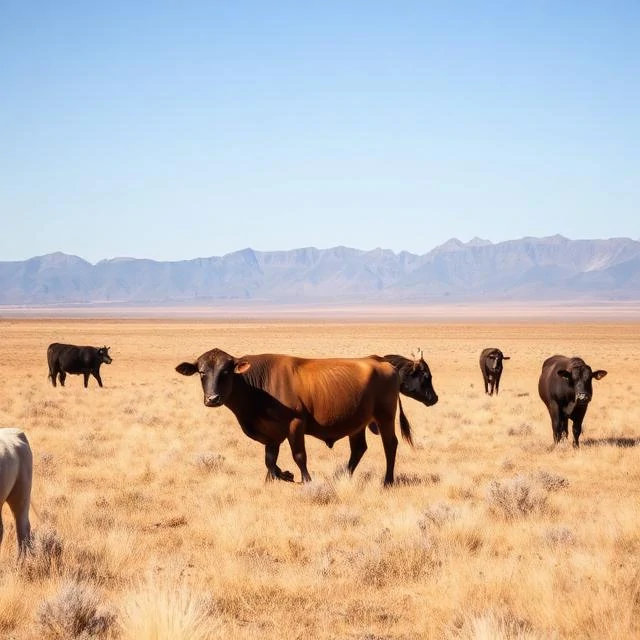
Rangeland is uncultivated land used for grazing, usually too dry, too rocky, or too steep to farm. It covers roughly half the Earth's land surface, from the American West and the Australian outback to the Sahel and the steppes of Central Asia. Most of it is grassland, shrubland, or savanna.
These lands are managed at very low intensity. A cow might need dozens of hectares to find enough forage. Rainfall is unpredictable, and drought is a recurring feature. Herders and ranchers move animals with the seasons, following the grass. In some regions, wildlife shares the range with livestock, and conflicts over water and forage are constant.
Common rangeland types
- Shortgrass and mixed-grass prairie
- Desert shrub and sagebrush steppe
- Tropical savanna and thorn scrub
- Alpine and subalpine meadows
Overgrazing is the main threat. When animals are kept on the same ground too long, palatable plants disappear, bare soil appears, and erosion follows. Rotational grazing, rest periods, and stocking rates matched to rainfall are the standard tools for keeping rangeland healthy.
Comments
No comments yet. Be the first to share a thought.
Leave a comment