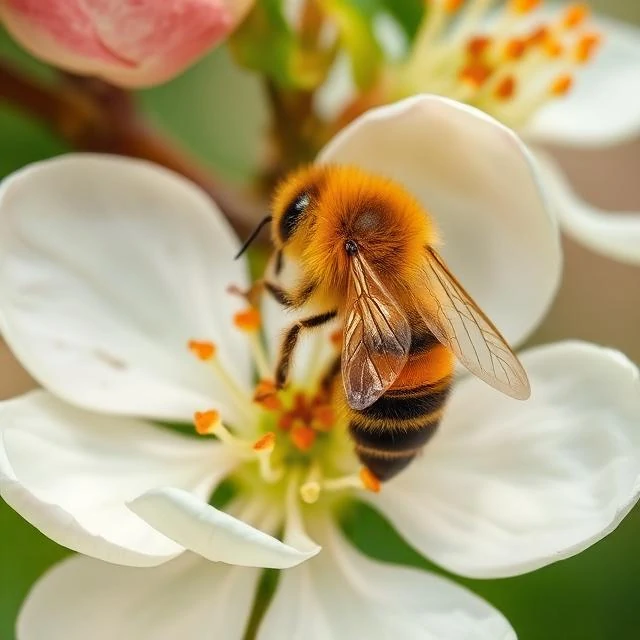
Pollination is the transfer of pollen from the male part of a flower, the anther, to the female part, the stigma. Once pollen lands, it grows a tube down to the ovule and fertilisation follows. Without it, most flowering plants produce no seed or fruit.
Some plants pollinate themselves. Others rely on wind, water, or animals. Bees are the most important animal pollinators, but butterflies, moths, flies, beetles, hummingbirds, and bats all play a role. Roughly three-quarters of the world's food crops depend at least partly on animal pollination, including apples, almonds, cucumbers, squash, coffee, and cocoa.
Pollination in trouble
- Habitat loss reduces wild pollinator populations
- Pesticides, especially neonicotinoids, harm bees
- Monocultures provide food in bursts, then nothing
- Climate change shifts flowering times and pollinator emergence
Growers respond with hedgerows, wildflower strips, and managed honey bee hives. Some crops, like almonds in California, depend on trucked-in hives during the few weeks of bloom.
Comments
No comments yet. Be the first to share a thought.
Leave a comment