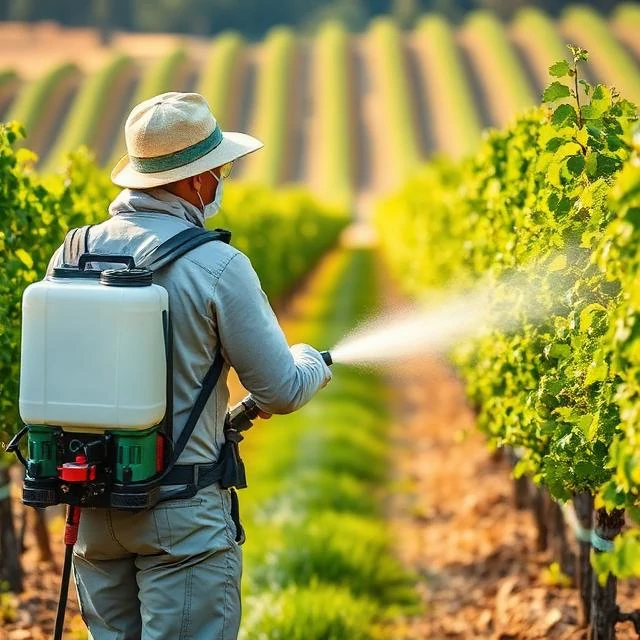
Fungicides are chemicals or biological agents that stop fungi from damaging crops. Powdery mildew on grapes, late blight on potatoes, rust on wheat, and grey mould on strawberries are all targets.
The modern era of fungicide use began in 1885, when French researchers noticed that vines sprayed with a copper-sulphate and lime mixture resisted downy mildew. The concoction, Bordeaux mixture, became the first widely used protectant. Today's products include triazoles, strobilurins, and copper compounds, applied by boom sprayer, backpack, or even drone.
How they work
- Protectants form a barrier before spores land
- Eradicants stop an infection that has already started
- Systemic products move inside the plant
- Biologicals use living organisms or their byproducts
Overuse breeds resistance. Fungi reproduce quickly, and a spray that works this season may fail the next. Growers rotate chemical groups and combine fungicides with resistant varieties, sanitation, and better airflow to keep disease pressure down.
Comments
No comments yet. Be the first to share a thought.
Leave a comment