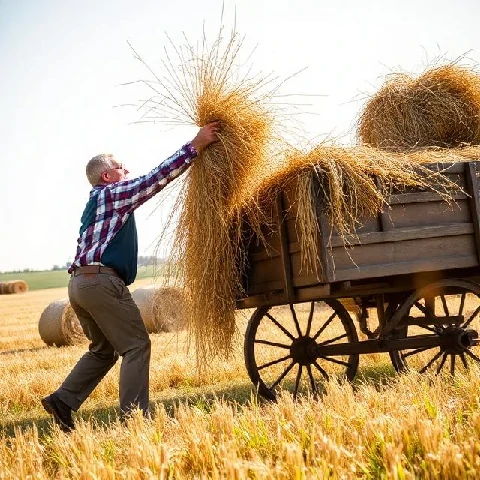
Fodder is feed that farmers bring to their animals, rather than letting the animals graze for themselves. Hay, straw, silage, and chopped green crops all count. The distinction from forage matters: forage is eaten where it grows, fodder is harvested and carried.
Good fodder is the backbone of livestock farming in places with cold winters or dry seasons, when pasture is unavailable. A dairy herd in Wisconsin may eat alfalfa hay for five months of the year. A village in the Sahel may rely on stored crop residues, like millet stalks and groundnut haulms, to get cattle through the dry season.
Common fodder types
- Hay: dried grass or legumes, baled and stored
- Silage: fermented moist forage kept airtight
- Straw: dry stalks left after grain harvest
- Roots and tubers: fodder beet, turnips, cassava
Quality varies enormously. Cut too late, grass loses protein and becomes tough. Stored too wet, hay can mould and even catch fire. Farmers judge fodder by smell, colour, and how eagerly animals eat it.
Comments
No comments yet. Be the first to share a thought.
Leave a comment