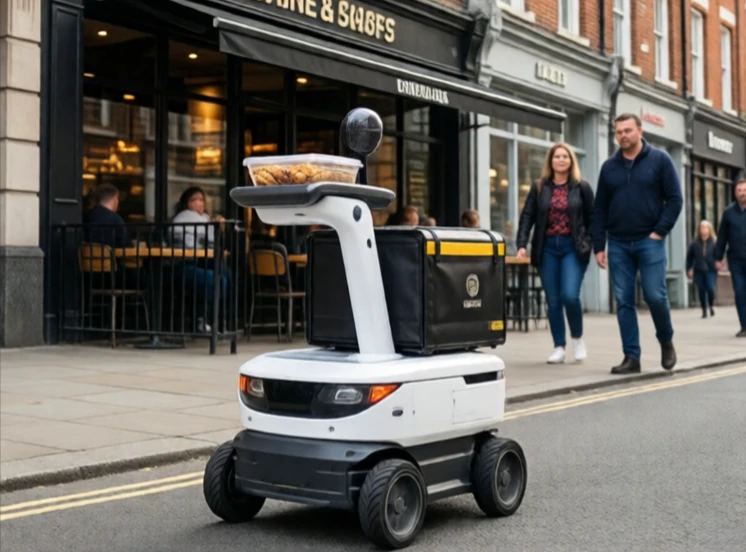
A service robot performs tasks for people outside manufacturing. It might vacuum a floor, deliver a meal, guide a museum tour, or assist a surgeon. The category is broad because service is broad. Any task that is not industrial production qualifies.
The International Federation of Robotics divides service robots into professional and personal. Professional service robots do jobs: cleaning, inspection, logistics, medical, defense. Personal service robots help individuals: vacuuming, lawn mowing, companionship, education. The personal segment is growing fast. Robot vacuums alone sell millions of units per year.
Service robot examples
- Robot vacuum: autonomous floor cleaning.
- Delivery robot: carries food, packages, or medicine.
- Telepresence robot: remote video and mobility.
- Medical robot: surgery, rehabilitation, disinfection.
- Agricultural robot: planting, weeding, harvesting.
Service robots face unstructured environments. A factory robot works in a fixed cell. A service robot works in a home, a hospital, or a city street. People move unpredictably. Floors have thresholds. Doors are closed. Lighting changes. That makes service robotics harder than industrial robotics in some ways. The robot must be robust, safe, and easy to use. It must also be affordable. A factory robot can cost $100,000 because it pays back in a year. A home robot must cost $500 or less to sell in volume. The economics are different. So are the design priorities. Service robots are the frontier of everyday robotics. They are not as capable as industrial robots, but they are entering our lives in ways that industrial robots never will.
Comments
No comments yet. Be the first to share a thought.
Leave a comment