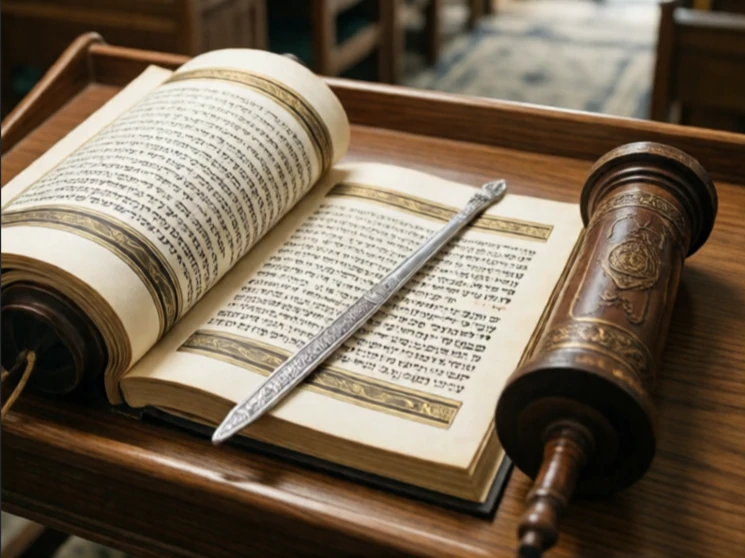
The Talmud is the central text of Rabbinic Judaism. It consists of the Mishnah—a concise code of oral law compiled around 200 CE—and the Gemara, the extensive commentary and debate that grew up around the Mishnah over the following centuries. Two versions exist: the Jerusalem Talmud and the longer, more influential Babylonian Talmud.
The page layout is distinctive. A short passage of Mishnah sits at the center; surrounding it are layers of discussion, cross-references, and later glosses. The content ranges from minute rules of Sabbath observance and dietary law to stories, ethical maxims, and theological speculation. Argument is the method. Rabbis disagree, raise difficulties, and resolve them—or leave them unresolved. The text trains the reader in a particular way of thinking as much as it conveys information.
For traditional Jews the Talmud is not merely a historical document. It is the oral Torah that stands alongside the written Torah of Moses. Study is itself a religious act, ideally pursued in pairs so that questions can be sharpened in dialogue. Modern critical scholarship examines the Talmud’s historical development; traditional study continues to treat it as a living conversation that still addresses the present.
To open the Talmud is to enter a room where the conversation has been going on for fifteen hundred years and shows no sign of ending.
Comments
No comments yet. Be the first to share a thought.
Leave a comment