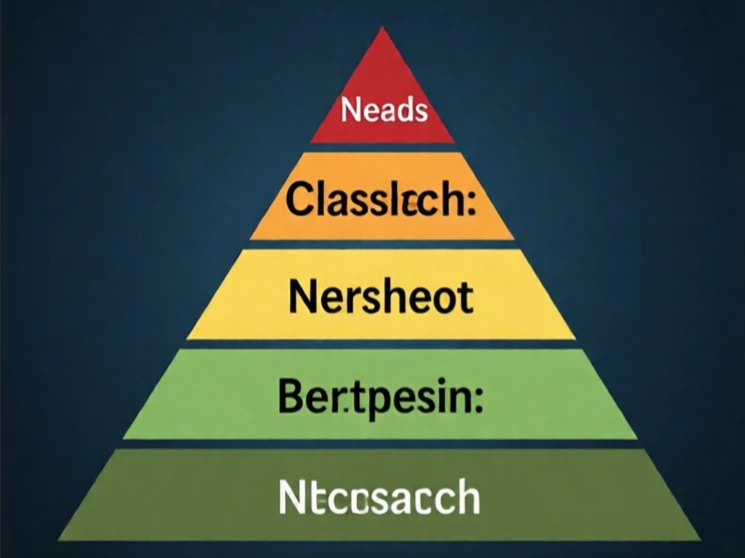
Abraham Maslow’s hierarchy of needs arranges human motives in a pyramid. Physiological needs form the base; safety needs come next; then belongingness and love; then esteem; and at the peak, self-actualization—the realization of one’s potential.
Maslow proposed that lower needs must be sufficiently satisfied before higher needs become strong motivators. A person who is starving is not primarily concerned with esteem or creativity. Once basic needs are met, attention shifts upward. Self-actualization is characterized by acceptance, spontaneity, creativity, and a focus on problems outside the self. Later versions of the hierarchy sometimes include cognitive needs, aesthetic needs, and transcendence.
The model is more a framework for thinking than a strict empirical law. People sometimes pursue higher needs even when lower ones are insecure, and cultures differ in the emphasis they place on individual self-actualization versus communal belonging. Nonetheless, the hierarchy remains one of the most widely taught ideas in motivation and continues to influence education, management, and counseling.
Maslow’s pyramid suggests that human motivation is layered, and that the highest layer appears only when the foundations are secure.
Comments
No comments yet. Be the first to share a thought.
Leave a comment