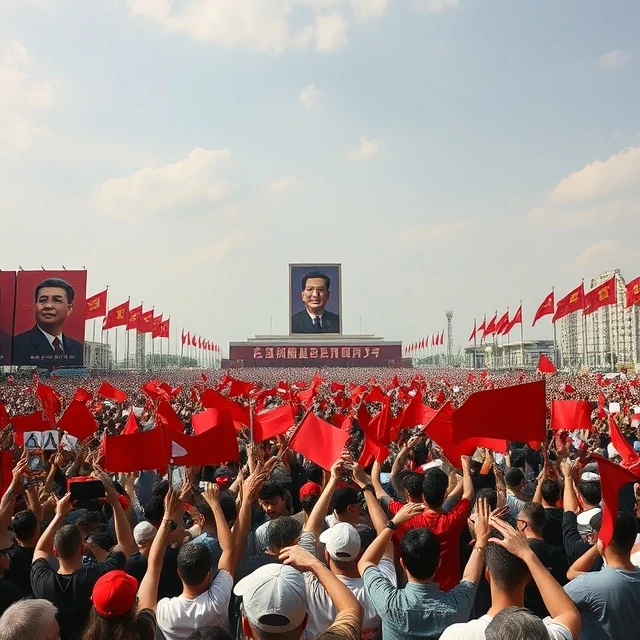
A regime that seeks to control nearly every aspect of public and private life is totalitarian. Unlike ordinary authoritarianism, totalitarianism mobilizes the population through a dominant ideology, a single mass party, and pervasive surveillance and propaganda.
Classic examples include Stalin’s Soviet Union, Nazi Germany, and certain phases of Maoist China. The state penetrates the economy, culture, education, and family life. Independent organizations are destroyed or absorbed. Terror and ideology work together to enforce conformity and to remake society according to the regime’s vision.
Totalitarian ambitions are never fully realized; pockets of private life and informal resistance persist. The concept remains useful for distinguishing maximally invasive dictatorships from authoritarian systems that leave wider zones of autonomy. The human cost of totalitarian experiments has made them a central negative reference in political thought.
When the party claims authority over truth itself, ordinary politics has already been left behind.
Comments
No comments yet. Be the first to share a thought.
Leave a comment