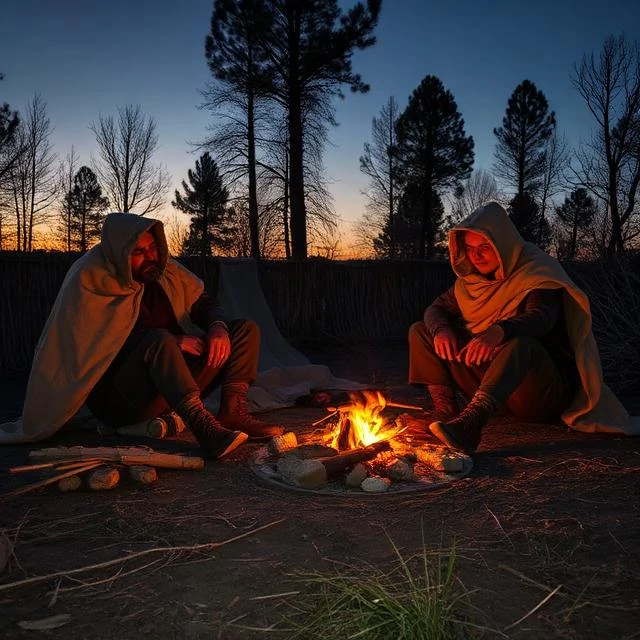
For most of human prehistory, people lived in bands: small groups of perhaps fifteen to fifty individuals, usually related by kinship. Members moved with the seasons, following game and plant resources. The band is the classic social organization of foraging peoples, documented among the !Kung San of the Kalahari, Inuit groups, and many Aboriginal Australian communities.
Bands are often described as egalitarian, and that is broadly true. Leadership tends to be informal and situational. A skilled hunter or respected elder may guide decisions, but no one holds permanent authority backed by force. Sharing is central. Meat from a large kill is distributed widely, and hoarding brings social censure. Disputes are handled by discussion, avoidance, or fission, where a group simply splits and moves apart.
Typical features
- Small size and high mobility.
- Kinship as the main organizing principle.
- Flexible membership; people join and leave camps.
- Little accumulated wealth or formal hierarchy.
These societies are not frozen relics. They have histories, adapt to changing conditions, and today many maintain band organization while engaging with states and markets.
Comments
No comments yet. Be the first to share a thought.
Leave a comment