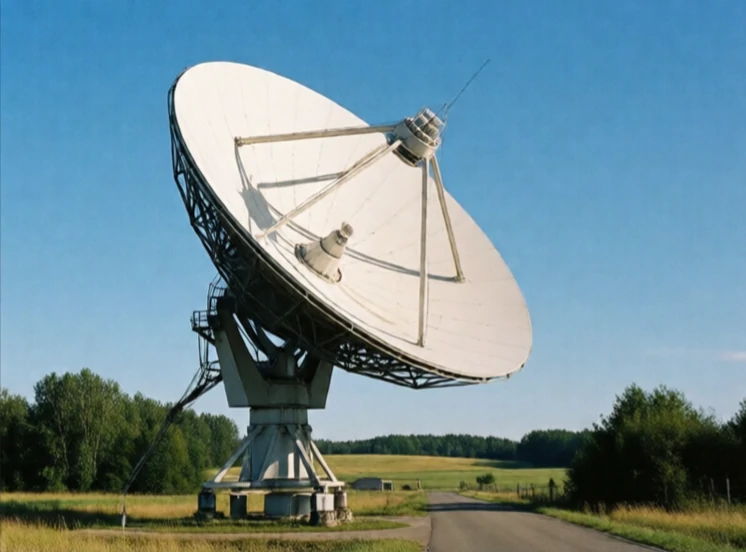
A geostationary satellite orbits in sync with Earth's rotation. It stays over the same spot on the equator. Its orbit is 35,786 kilometers above the surface. At that altitude, its orbital period matches Earth's rotation. From the ground, it appears fixed in the sky. That makes it ideal for communication and weather observation.
The concept was popularized by Arthur C. Clarke in 1945. He proposed using geostationary satellites for global communications. The first was Syncom 3 in 1964, which broadcast the Tokyo Olympics. Today, hundreds of geostationary satellites relay TV, telephony, and data. They are the backbone of satellite communication.
Geostationary satellite characteristics
- Fixed position over the equator
- High latency: about 250 milliseconds round trip
- Wide coverage: about one third of Earth's surface
- Expensive to launch and operate
- Used for TV, weather, and some internet
Geostationary satellites have drawbacks. The high orbit means high latency. That is bad for real-time applications like gaming and video calls. Low Earth orbit constellations like Starlink offer lower latency. But geostationary satellites still dominate TV broadcasting and weather monitoring.
Comments
No comments yet. Be the first to share a thought.
Leave a comment