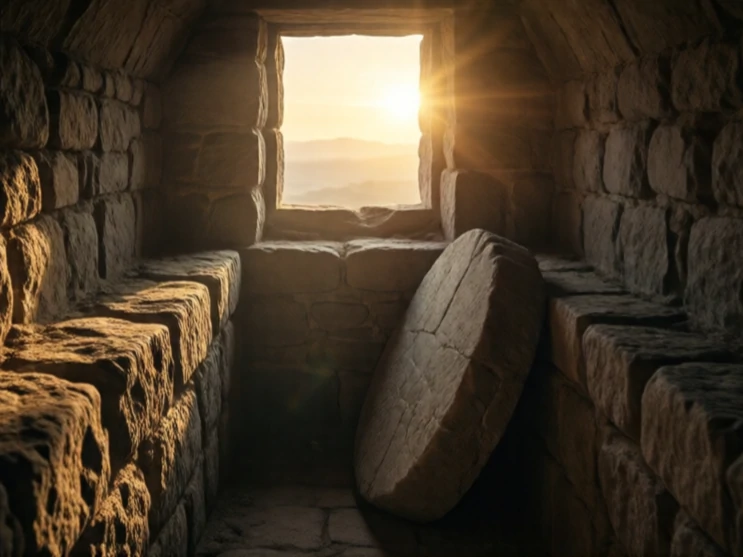
On the third day the tomb was empty. That claim stands at the center of Christian faith. Resurrection is the rising of Jesus from the dead, and by extension the future rising of those who belong to him.
The New Testament writers insist that the event was bodily. The risen Jesus could be touched, could eat, yet was no longer bound by ordinary physical limits. Paul treats the resurrection as the first fruits of a larger harvest: because Christ has been raised, those who die in him will also be raised when he returns. The hope is not escape from the body but the redemption of the body, a transformed physical existence in a renewed creation.
Jewish expectation of a general resurrection at the end of the age provided the background, yet the Christian claim was distinctive: one man had already been raised as the beginning of the end. Early preaching treated the resurrection as both historical fact and theological hinge. Without it, Paul said, faith is futile and preaching is empty.
Artistic and liturgical traditions have lingered over the moment—the women at the tomb, the appearance to Mary Magdalene, the meal at Emmaus. The creed simply states the fact and moves on to its consequence: the life of the world to come.
Comments
No comments yet. Be the first to share a thought.
Leave a comment