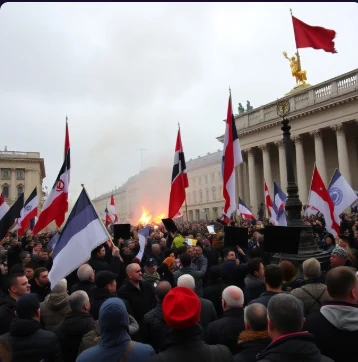
Fundamental and relatively rapid transformation of political power and often of social structure constitutes a revolution. Revolutions typically involve mass mobilization, the collapse or overthrow of the existing regime, and the attempt to establish a new order.
Causes include long-term structural pressures—economic change, state weakness, elite division—and shorter-term triggers such as fiscal crisis or military defeat. Outcomes vary: some revolutions produce lasting institutional change; others yield cycles of violence, new dictatorships, or partial restoration of the old order. The French, Russian, and Chinese revolutions remain central reference points.
Revolutionary ideology supplies justification and direction, yet practical struggles for power often reshape original goals. Comparative study seeks patterns without erasing the distinctiveness of each case. The threat or memory of revolution continues to influence how rulers and oppositions behave.
A successful revolution redraws the boundary of the politically possible.
Comments
No comments yet. Be the first to share a thought.
Leave a comment