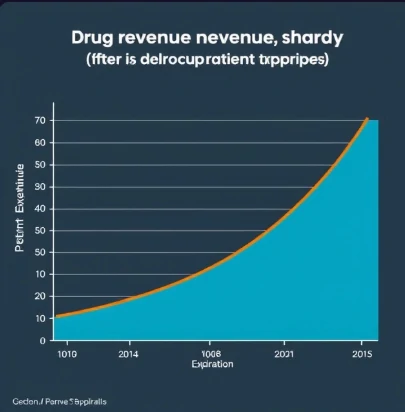
When a drug patent expires, the exclusivity ends. Other companies can make and sell the same drug, usually as a generic or biosimilar, and prices fall. This moment is one of the most consequential events in the pharmaceutical market. A drug that generated billions in revenue can lose most of its sales within months as generic competitors enter.
The timing is predictable but not exact. A patent lasts 20 years from filing, but the effective market exclusivity is shorter because clinical trials and regulatory review consume years of that time. Companies can extend protection with secondary patents, pediatric exclusivity, or other regulatory incentives, but eventually the patent expires. When it does, the FDA or EMA approves generic versions, and pharmacies begin substituting them. The price drop can be dramatic: 80 to 90 percent or more. For patients and insurers, this is a windfall. For the innovator company, it is a cliff.
What happens at expiration:
- Generic entry. Competitors launch equivalent products.
- Price collapse. The cost of the drug drops sharply.
- Market shift. Prescriptions switch to generics, often automatically.
- Revenue loss. The innovator loses most of the drug's sales.
Companies plan for expiration years in advance, launching next-generation products or reformulations to retain revenue. Some drugs are so complex that generic competition is delayed, which is common with biologics.
Comments
No comments yet. Be the first to share a thought.
Leave a comment