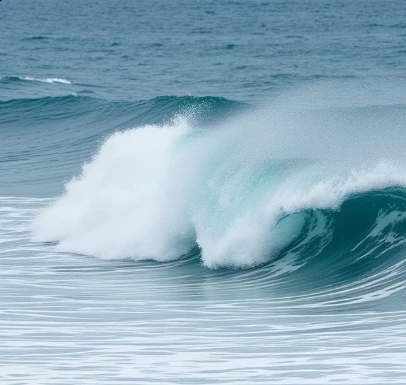
Sudden displacement of the seafloor—usually by an earthquake, but also by landslides or volcanic eruptions—generates waves that travel across entire ocean basins. These waves are tsunamis. In deep water they are fast and have small amplitude; in shallow coastal water they slow down, grow in height, and can inundate the shore with devastating force.
Tsunami waves have periods of minutes to an hour, far longer than ordinary wind waves. The first sign at the coast may be a rapid withdrawal of water followed by a series of large onshore surges. Warning systems use seismic data and coastal or deep-ocean pressure sensors to detect potential tsunamis and issue alerts.
Historical tsunamis have killed hundreds of thousands of people and reshaped coastlines. Building codes, education, and evacuation routes reduce risk in vulnerable regions. Because the generating events cannot be prevented, timely warning and preparedness remain the primary defenses.
A tsunami can cross the Pacific Ocean in less than a day and still retain destructive power on distant shores.
Comments
No comments yet. Be the first to share a thought.
Leave a comment