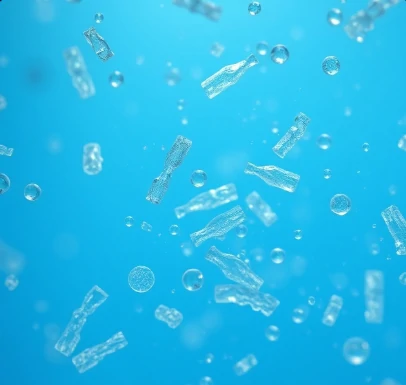
Plastic fragments smaller than five millimeters are classified as microplastics. They enter the ocean already small—as microbeads or synthetic fibers—or form through the breakdown of larger plastic debris by sunlight, waves, and mechanical abrasion.
Microplastics are now found from surface waters to deep-sea sediments, in Arctic ice, and inside the bodies of organisms ranging from plankton to whales. They can be ingested, potentially transferring chemical additives or adsorbed pollutants, and may physically block digestive tracts. The full ecological and human-health consequences are still being quantified.
Sampling requires specialized nets, filters, and careful contamination control. Identifying the polymer type often needs spectroscopic methods. Reducing microplastic pollution involves preventing larger plastic from entering the environment, redesigning products that shed fibers or beads, and improving wastewater treatment. Because the particles are so widely dispersed, cleanup of existing microplastics on any meaningful scale is impractical.
- Plastic particles smaller than 5 mm
- From primary sources or breakdown of larger debris
- Widespread in water, sediment, and organisms
- Difficult to remove once dispersed
Comments
No comments yet. Be the first to share a thought.
Leave a comment