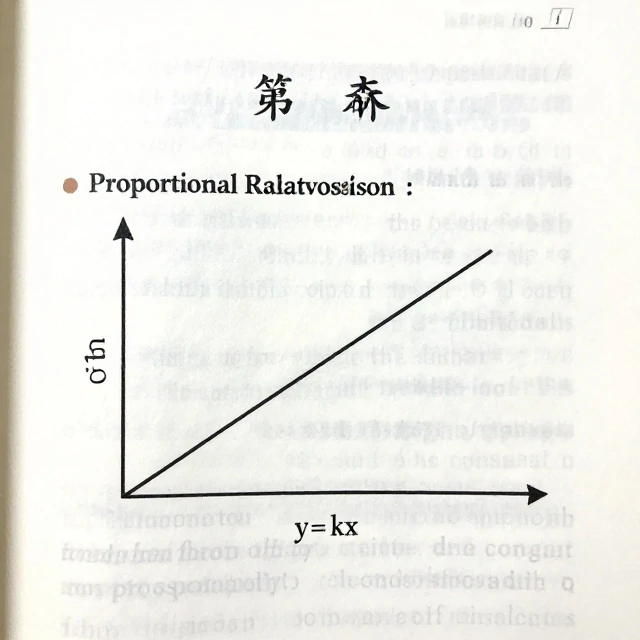
A proportional relationship is one where two quantities have a constant ratio. Divide one by the other and you always get the same number. That number is the constant of proportionality. The graph is a straight line through the origin. The equation is y equals kx, where k is the constant.
If a car travels at a constant speed, the distance is proportional to the time. Distance equals speed times time. The speed is the constant of proportionality. Double the time and the distance doubles. Triple the time and the distance triples. The ratio of distance to time is always the same.
Proportional relationship characteristics
- Constant ratio between quantities.
- Graph is a line through the origin.
- Equation is y = kx.
- k is the constant of proportionality.
- If one quantity is zero, the other is zero.
Proportional relationships are everywhere. The circumference of a circle is proportional to its diameter. The constant is pi. The cost of apples is proportional to the weight. The constant is the price per pound. The force of a spring is proportional to its stretch. The constant is the spring constant. In each case, the ratio is constant. The graph is a line through the origin. That is the signature of proportionality. Not all linear relationships are proportional. A line with a y-intercept other than zero is linear but not proportional. y = 2x + 3 is linear. y = 2x is proportional. The difference is the intercept. Proportional relationships start at zero. When x is zero, y is zero. That is the key distinction. Proportionality is a special case of linearity.
Comments
No comments yet. Be the first to share a thought.
Leave a comment