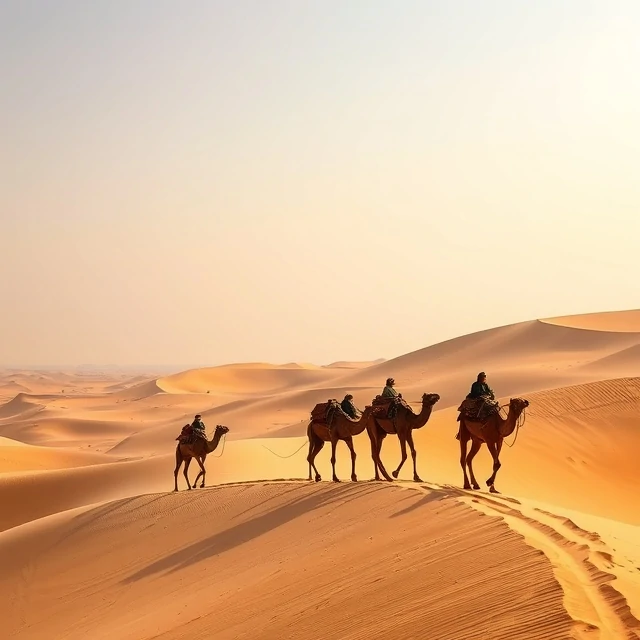
Caravans once linked China with the Mediterranean across deserts and mountains. The Silk Road was a network of trade routes, active especially between the second century BCE and the fourteenth century CE, that carried silk, spices, precious metals, ideas, and religions across Eurasia.
No single road existed; rather, overlapping itineraries connected oases, cities, and seasonal pastures. Empires along the routes—Chinese, Kushan, Persian, Islamic, Mongol—taxed and protected trade to varying degrees. Cultural exchange accompanied commerce: Buddhism, technologies, and artistic motifs traveled with the merchants.
Decline followed the rise of maritime routes and political fragmentation. Archaeological finds and textual records from multiple languages document the traffic. The romantic name “Silk Road” is modern, yet it usefully evokes the long-distance connectivity that shaped societies far from any single political center.
- Ancient Eurasian overland trade network
- Carried goods, technologies, and religions
- Linked China with western Asia and Europe
- Declined with maritime competition
Comments
No comments yet. Be the first to share a thought.
Leave a comment