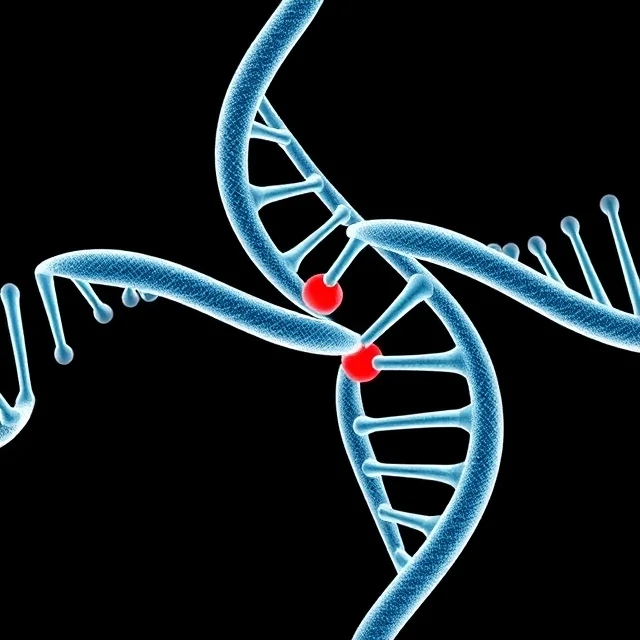
The smallest change in DNA can still have large consequences. A point mutation is an alteration of a single nucleotide—substitution, insertion, or deletion of one base. Substitutions are the most common and are classified as transitions or transversions.
A silent substitution leaves the amino acid unchanged because of code degeneracy. A missense mutation changes one amino acid; a nonsense mutation creates a premature stop codon. Single-base insertions or deletions cause frameshifts unless they occur in multiples of three.
Point mutations arise from replication errors or DNA damage. Many disease-causing alleles are point mutations, including the classic sickle-cell substitution. Sequencing detects them with high accuracy. Their effects range from none to complete loss of protein function, depending on location and type.
- Change affecting a single nucleotide
- Includes substitutions, insertions, and deletions
- Can be silent, missense, or nonsense
- Common cause of genetic variation and disease
Comments
No comments yet. Be the first to share a thought.
Leave a comment