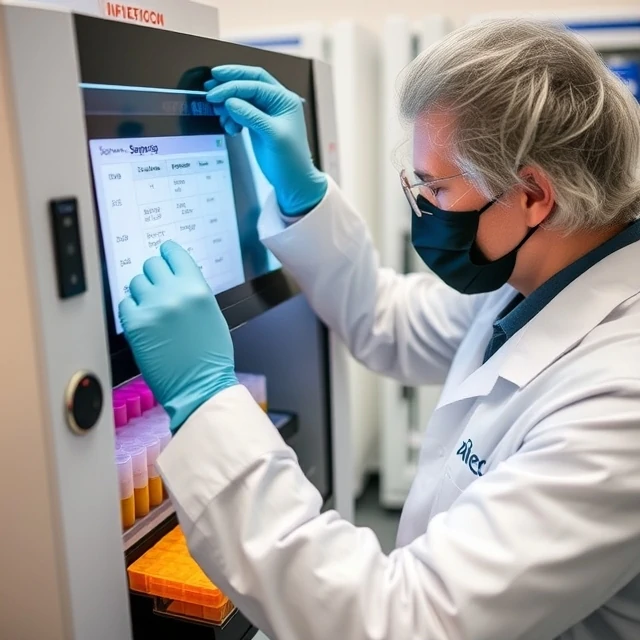
Reading the exact order of bases in a DNA molecule is the foundation of modern genetics. DNA sequencing determines the sequence of adenine, thymine, cytosine, and guanine along a strand. Early methods used chain-terminating nucleotides; current technologies generate massive parallel data.
Sanger sequencing remains useful for targeted regions. Next-generation platforms sequence millions of fragments simultaneously, enabling whole-genome and whole-exome analysis. The resulting reads are aligned to a reference genome to identify variants.
Clinical laboratories use sequencing to diagnose rare diseases, guide cancer therapy, and identify pathogens. Costs have fallen dramatically, making large-scale projects feasible. Accuracy, coverage depth, and bioinformatic interpretation determine the clinical utility of the results.
- Process of determining nucleotide order in DNA
- Includes Sanger and next-generation methods
- Identifies variants relative to a reference
- Essential for diagnosis and research
Comments
No comments yet. Be the first to share a thought.
Leave a comment