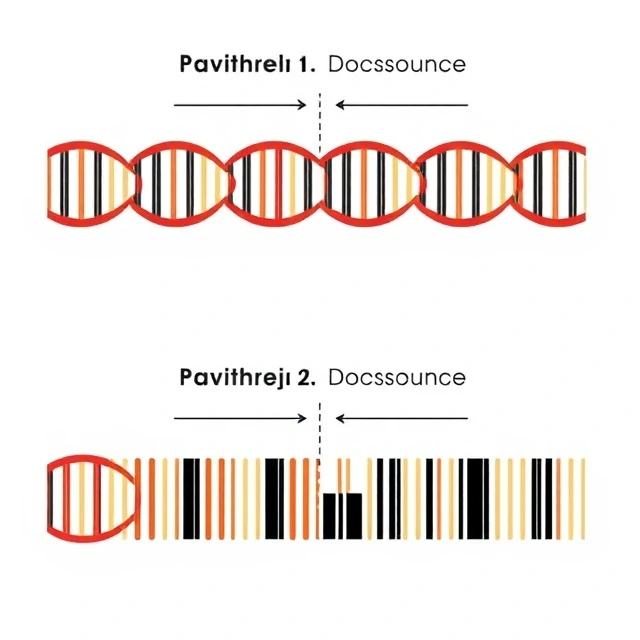
Sometimes a stretch of DNA simply disappears. A deletion is a mutation in which one or more nucleotides are removed from a chromosome or gene. Small deletions may affect a single base; large ones can remove multiple genes and produce recognizable syndromes.
If the number of deleted bases is not a multiple of three, the reading frame shifts and downstream amino acids are altered. Even in-frame deletions can remove critical protein domains. Deletions arise from unequal crossing over, replication errors, or DNA repair mistakes.
Clinical laboratories detect deletions with chromosomal microarray, multiplex ligation-dependent probe amplification, or sequencing. Famous examples include the 22q11.2 deletion that causes DiGeorge syndrome and the dystrophin deletions responsible for many cases of Duchenne muscular dystrophy. Size and location determine the severity of the phenotype.
- Loss of one or more nucleotides from DNA
- Can be small or span multiple genes
- May cause frameshifts if not in multiples of three
- Detected by microarray or sequencing methods
Comments
No comments yet. Be the first to share a thought.
Leave a comment