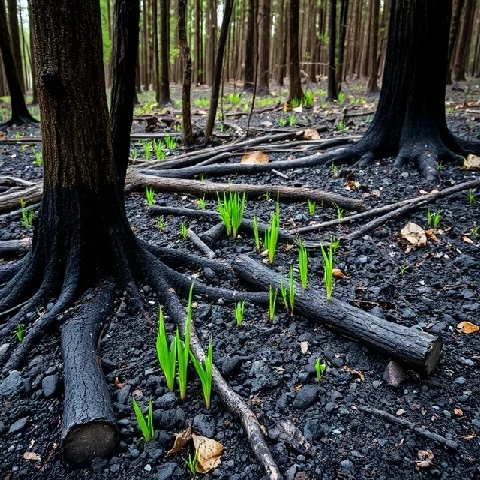
A forest burns. The soil survives, along with seeds, roots, and dormant buds. Within weeks, green shoots push through the ash. That recovery is secondary succession: the rebuilding of an ecosystem after a disturbance, on ground that already supported life.
It differs from primary succession, which starts on bare rock or new volcanic land with no soil at all. Primary succession takes centuries. Secondary succession can move much faster because the foundation is already there. Nutrients remain in the soil. Seed banks lie waiting. Nearby intact habitat provides a source of colonists.
Typical sequence after a disturbance
- Fast-growing annual plants and grasses appear first
- Shrubs and pioneer trees move in within a few years
- Shade-tolerant tree species gradually dominate
- A mature forest returns, though species composition may differ
Hurricanes, floods, landslides, and abandoned farmland all trigger secondary succession. So does clear-cutting, though repeated logging can push a system past the point of easy recovery. The classic example is New England. Almost every forest there regrew after 19th-century farms were abandoned. The trees came back, but the chestnuts did not. Disturbance resets the clock, and the new ecosystem is rarely a perfect copy of the old one.
Comments
No comments yet. Be the first to share a thought.
Leave a comment