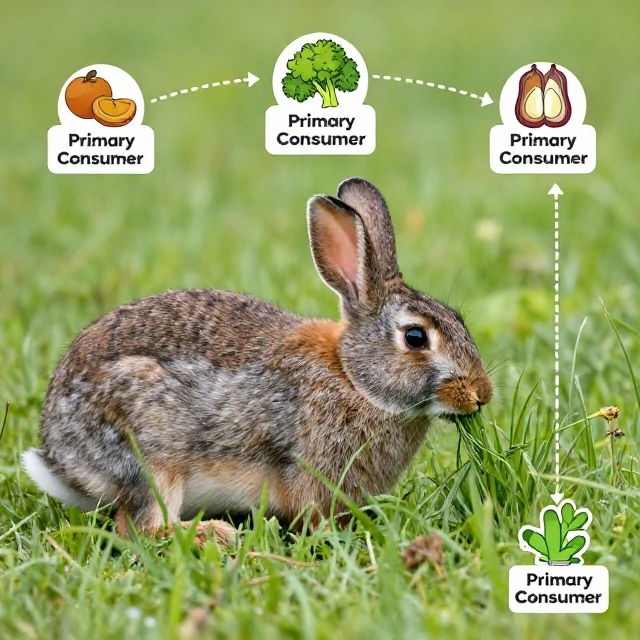
A primary consumer feeds directly on producers. Producers are plants, algae, and some bacteria. Primary consumers are herbivores. They eat plants. They are the second trophic level in a food chain. Producers are the first. Primary consumers are the second.
Examples include rabbits eating grass, deer browsing leaves, and caterpillars chewing milkweed. In aquatic ecosystems, zooplankton graze on phytoplankton. Primary consumers convert plant matter into animal tissue. That energy is then available to secondary consumers, which eat the primary consumers.
Primary consumer characteristics
- Herbivores: eat plants or algae.
- Second trophic level.
- Convert plant energy into animal biomass.
- Prey for secondary consumers.
- Can be small (insects) or large (elephants).
Primary consumers are the bridge between producers and carnivores. Without them, plant energy would not reach higher trophic levels. They are also important for plant population control. Grazing keeps plant growth in check. Overgrazing can damage ecosystems. Under-grazing can lead to overgrowth and fire risk. The balance is delicate. Primary consumers are often the most abundant animals in an ecosystem. There are more rabbits than foxes. More zooplankton than fish. That is because energy is lost at each trophic level. Only about 10 percent of the energy in plants is converted into primary consumer biomass. The rest is lost as heat, waste, and respiration. That is why food chains rarely have more than four or five levels. Energy runs out. Primary consumers are the first step in the transfer of that energy from plants to animals.
Comments
No comments yet. Be the first to share a thought.
Leave a comment