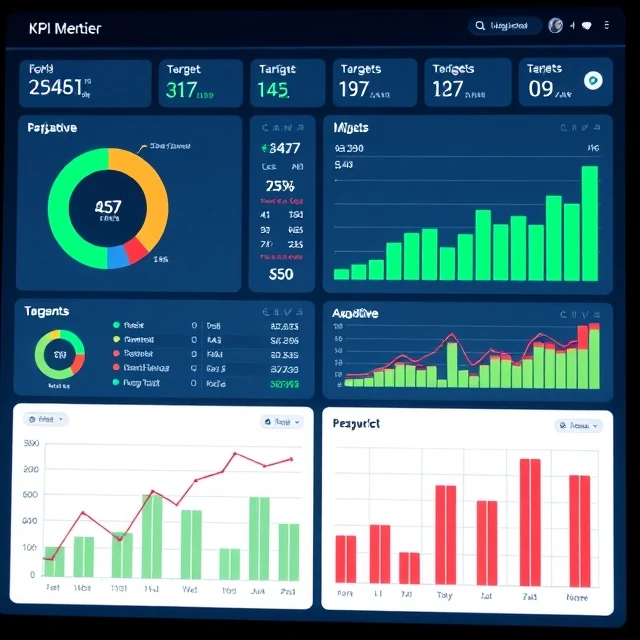
A key performance indicator measures progress toward a specific goal. Revenue growth, customer acquisition cost, employee turnover, uptime percentage. A KPI is not just any metric. It is a metric that matters to the business at a particular time. A metric that nobody acts on is not a KPI. It is trivia with a dashboard.
Good KPIs share certain traits. They are specific and measurable. They tie to a business objective. They have a target and a timeframe. They are reviewed regularly. A KPI without a target is just a number. A KPI without an owner is nobody's responsibility. Choosing the right KPIs is harder than tracking them. Too many KPIs dilute focus. If everything is a priority, nothing is. Most teams do better with three to five KPIs than with twenty. The KPIs should also connect to each other. A marketing team might track lead generation, conversion rate, and cost per acquisition. Those three tell a coherent story about the marketing funnel. Tracking lead generation without conversion rate can encourage quantity over quality. Tracking conversion without cost can encourage spending. The KPIs work together to discourage gaming one metric at the expense of another.
KPI characteristics
- Specific — clearly defined and measurable
- Aligned — tied to a business objective
- Actionable — the team can influence it
- Time-bound — measured over a defined period
- Owned — someone is accountable for it
A KPI is a compass. It tells you whether you are moving toward the goal or away from it. The wrong KPI points in the wrong direction.
Comments
No comments yet. Be the first to share a thought.
Leave a comment