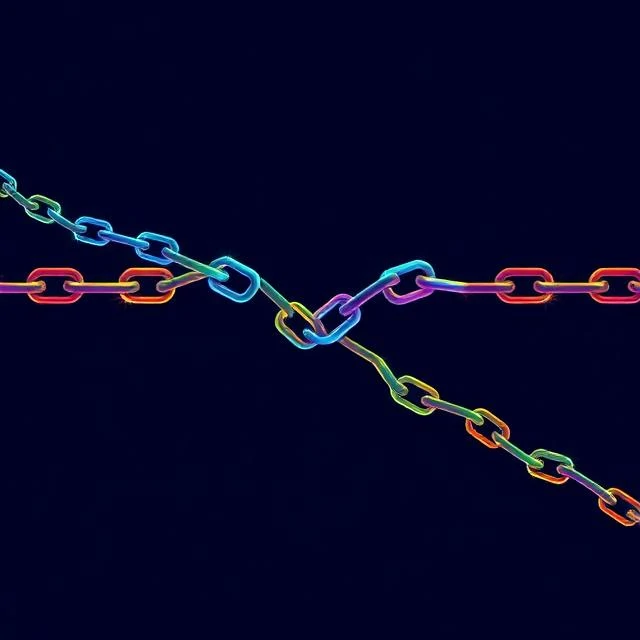
A hard fork is a permanent change to a blockchain's rules that makes old nodes incompatible with new ones. Every node must upgrade to stay on the chain. If some nodes refuse, the network splits. Two chains emerge from the same history. That is what happened with Ethereum and Ethereum Classic in 2016, and with Bitcoin and Bitcoin Cash in 2017. Both chains still exist. Each has its own community, developers, and price.
Not every hard fork splits the chain. Most are planned upgrades that everyone agrees to. Ethereum's London upgrade in 2021 included EIP-1559, which changed the fee market. Nodes upgraded. No split occurred. The contentious forks are the ones that make headlines. They usually involve a disagreement over protocol rules or a response to a hack. A hard fork is a governance mechanism. It lets the network evolve without a central authority, but it also gives dissenting groups a way to exit. The chain that retains the majority of users and miners usually keeps the original name and ticker.
Hard fork characteristics
- Breaking change — old nodes cannot validate new blocks
- Chain split — possible if some nodes refuse to upgrade
- New chain — sometimes inherits history but diverges going forward
- Governance tool — the ultimate way to resolve disputes
Hard forks are messy. They are also how decentralized networks make decisions.
Comments
No comments yet. Be the first to share a thought.
Leave a comment