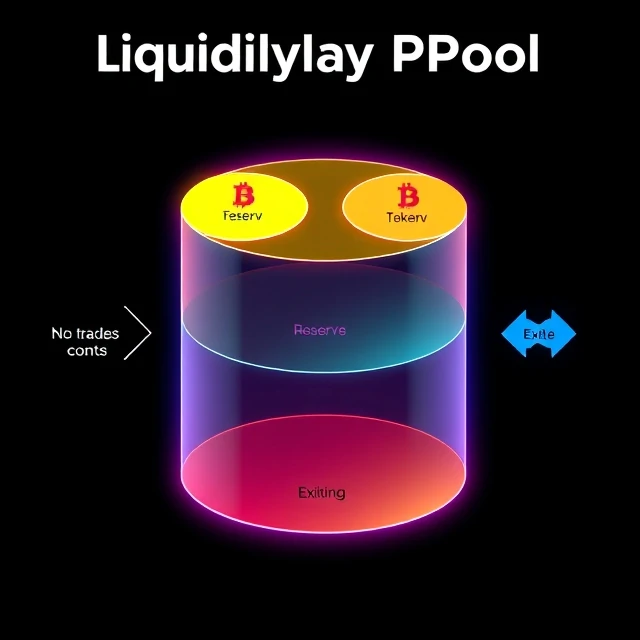
An automated market maker prices assets with a formula instead of an order book. There is no buyer on the other side of your trade. You trade against a pool of tokens. The pool holds reserves of two assets, and a mathematical rule adjusts the price as the ratio between them changes. Uniswap popularized the constant product formula: x times y equals k. When someone buys Token A, they add Token B to the pool. Token A becomes scarcer, so its price rises. The formula handles the rest.
Liquidity providers deposit equal values of both tokens into the pool and earn a share of trading fees. In return, they take on impermanent loss. If the price of one token moves sharply against the other, the provider ends up with less value than if they had simply held the tokens. The pool rebalances automatically, and that rebalancing can work against the provider's interest.
AMM trade-offs
- Always open — no need to wait for a counterparty
- Permissionless — anyone can provide liquidity
- Non-custodial — you keep control of your funds
- Impermanent loss — price divergence hurts providers
- MEV risk — bots front-run trades on public mempools
AMMs made decentralized trading practical. They also created new ways to lose money.
Comments
No comments yet. Be the first to share a thought.
Leave a comment