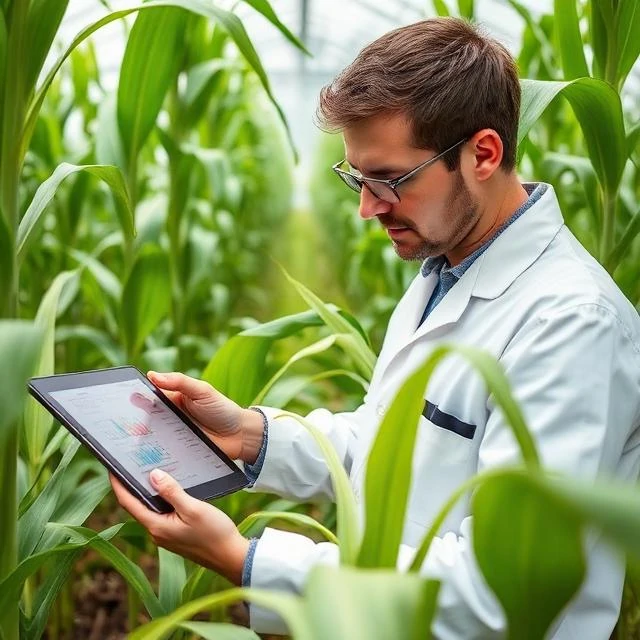
A drought hits a corn belt, and some fields yield twice as much as others. Agrigenomics asks why. It applies genomics to agriculture, studying the DNA of crops and livestock to find the genes behind yield, disease resistance, drought tolerance, and nutritional content. The goal is to breed better plants and animals faster than traditional selection allows.
Traditional breeding relies on observation and patience. A breeder crosses two varieties, grows the offspring, and picks the best. That takes years. Genomic tools shorten the cycle. Breeders sequence the DNA of thousands of plants, identify markers linked to desirable traits, and select seedlings before they ever reach the field. Genomic selection has transformed dairy cattle breeding and is spreading to wheat, rice, and maize.
The technology also raises questions. Gene editing with CRISPR can introduce traits that would never arise through conventional breeding. Who decides which edits are acceptable? Who owns the resulting seeds? Farmers in developing countries may not afford the licensing fees. The science moves quickly. The rules move slowly.
Agrigenomics is not just about bigger harvests. It is about feeding a growing population on less land, with less water, in a changing climate. That is the challenge the field is trying to meet.
Comments
No comments yet. Be the first to share a thought.
Leave a comment