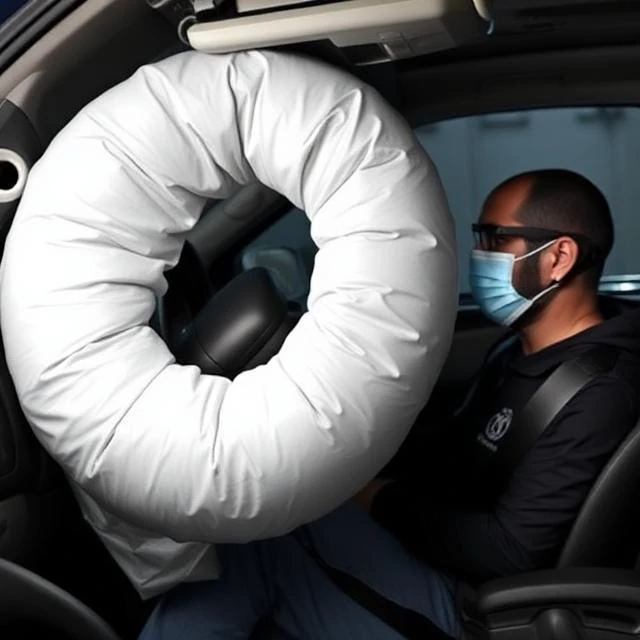
In a frontal crash, a car stops in about 100 milliseconds. The occupants keep moving. An airbag deploys in 30 milliseconds, faster than a blink, to cushion that motion. It is a nylon bag folded inside the steering wheel, dashboard, seat, or roof rail, and it inflates when sensors detect a sudden deceleration.
The chemistry is violent. A small explosive charge ignites a solid propellant, usually sodium azide or a similar compound, producing a burst of nitrogen gas. The bag inflates to full size, then immediately vents through holes in the fabric. The whole sequence is over in a fraction of a second. The driver hits the bag as it is deflating, which absorbs energy rather than bouncing them back.
Airbags are supplemental restraints. They work with seat belts, not instead of them. An unbelted occupant can slide under the bag or be thrown into it at the wrong angle. Children under 13 should sit in the back seat, because a front airbag can injure a small body. Side airbags, curtain airbags, and knee airbags add protection in different crash types.
Takata's defective inflators triggered the largest automotive recall in history, affecting tens of millions of vehicles. The lesson was blunt: a safety device that fails can be more dangerous than none at all.
Comments
No comments yet. Be the first to share a thought.
Leave a comment