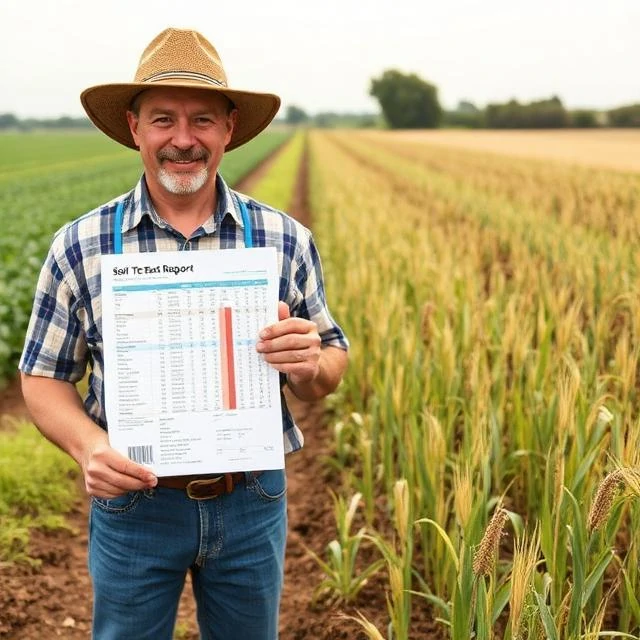
A nutrient is a substance an organism needs to live and grow. For plants, the list runs from the big three, nitrogen, phosphorus, and potassium, down to trace elements like boron and molybdenum that are needed in amounts measured in grams per hectare.
Plants take up nutrients mainly through roots, in dissolved form. Carbon comes from the air as carbon dioxide. Hydrogen and oxygen come from water. Everything else must come from the soil, from fertiliser, or from organic matter that releases nutrients as it decomposes. If any single nutrient is in short supply, growth is capped, no matter how much of the others are present. This is Liebig's law of the minimum, and it explains why a field can look well-fed and still underperform.
Nutrient categories
- Macronutrients: nitrogen, phosphorus, potassium, calcium, magnesium, sulphur
- Micronutrients: iron, manganese, zinc, copper, boron, molybdenum, nickel, chlorine
- Beneficial elements: silicon, cobalt, sodium in some species
Nutrient management is a balancing act. Too little limits yield. Too much wastes money, pollutes water, and can harm soil life.
Comments
No comments yet. Be the first to share a thought.
Leave a comment