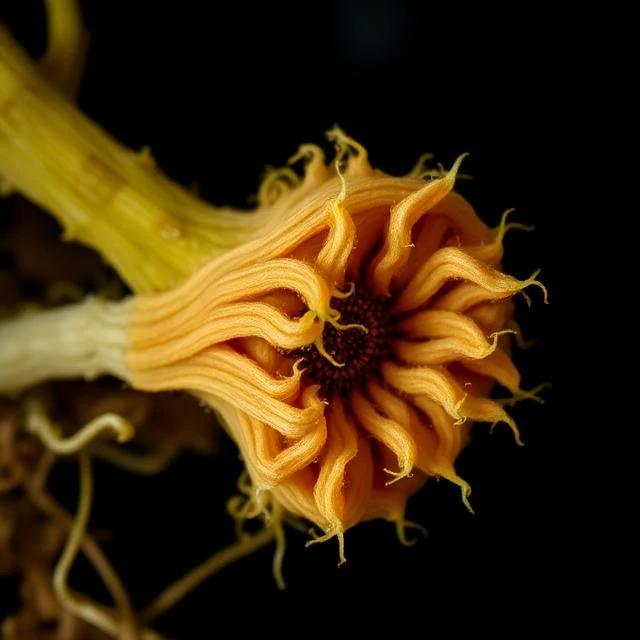
Mycorrhiza is a partnership between a fungus and a plant root. The fungus threads through the soil, gathering water and nutrients, and trades them to the plant for sugars made through photosynthesis. The arrangement is ancient, dating back more than 400 million years, and most land plants form it.
There are two main types. Arbuscular mycorrhizae penetrate root cells and are common in grasses, vegetables, and most field crops. Ectomycorrhizae wrap around root tips and are typical of trees like pines, oaks, and birches. The fungal network can extend far beyond the reach of roots, effectively multiplying the plant's foraging area.
What the plant gains
- Improved phosphorus uptake, especially in low-fertility soils
- Better access to water during dry spells
- Greater resistance to some root pathogens
- Improved soil aggregation through fungal hyphae
Not all farming favours mycorrhizae. High phosphorus fertiliser, frequent tillage, and fallow periods all reduce their populations. Reduced tillage, cover crops, and lower input systems tend to support them better.
Comments
No comments yet. Be the first to share a thought.
Leave a comment