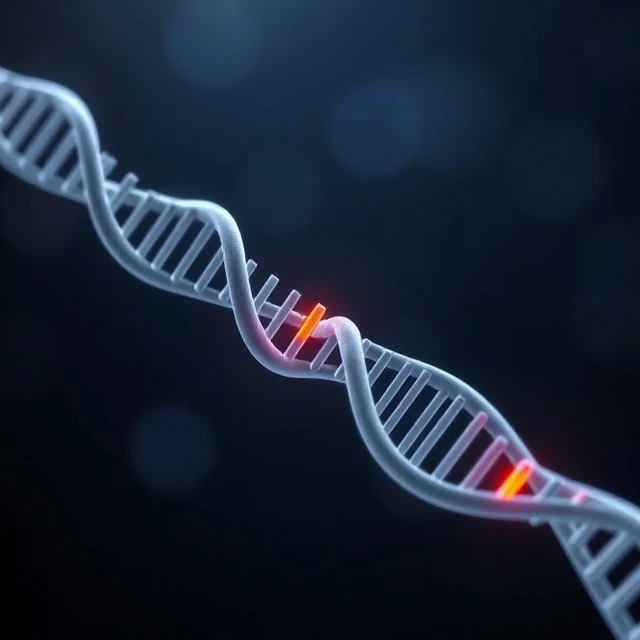
The genetic instructions are read in groups of three. A codon is a sequence of three nucleotides in messenger RNA that specifies a particular amino acid or a stop signal during protein synthesis. Sixty-four possible codons exist; 61 code for amino acids and three signal termination.
The genetic code is nearly universal. AUG, for example, codes for methionine and also serves as the start codon. Transfer RNAs recognize codons through complementary anticodons and deliver the corresponding amino acids to the ribosome.
Because multiple codons can specify the same amino acid, the code is degenerate. This redundancy cushions the effect of some point mutations. Researchers exploit codon usage bias when designing synthetic genes for efficient expression in different organisms.
- Three-nucleotide sequence in mRNA
- Specifies an amino acid or stop signal
- Part of the nearly universal genetic code
- Recognized by transfer RNA anticodons
Comments
No comments yet. Be the first to share a thought.
Leave a comment