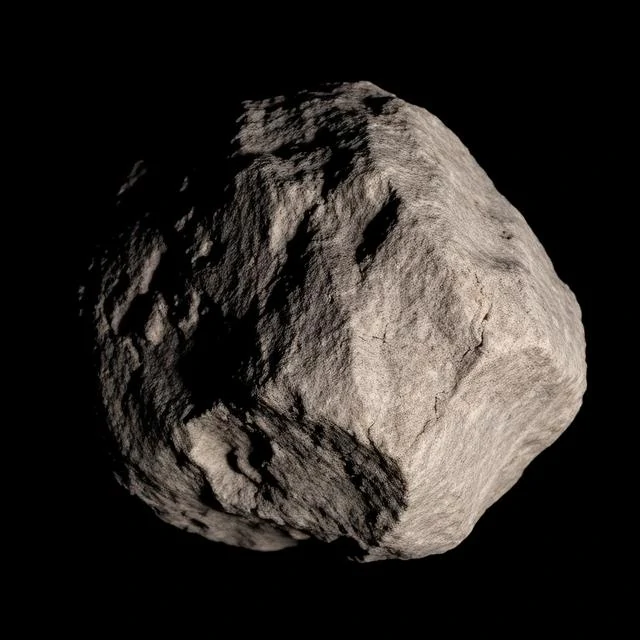
Asteroids are rocky leftovers from the formation of the solar system. They orbit the Sun, mostly in a belt between Mars and Jupiter, and range in size from pebbles to Vesta, which is about 525 kilometers across. Unlike planets, they never gathered enough mass to become round. Most are irregular chunks of rock and metal.
They matter for two reasons. First, they are time capsules. Their composition preserves the chemistry of the early solar nebula, before planets formed. Missions like OSIRIS-REx and Hayabusa2 have returned samples that scientists are still analyzing. Second, they can hit us. The impact that killed the dinosaurs 66 million years ago was caused by an asteroid roughly 10 kilometers wide. Smaller ones arrive more often.
Astronomers have cataloged most of the large near-Earth asteroids, but many smaller ones remain undiscovered. Planetary defense programs track them and study ways to deflect a threatening object. In 2022, NASA's DART mission successfully changed the orbit of a small asteroid moonlet, proving that the technique works.
Comments
No comments yet. Be the first to share a thought.
Leave a comment